
Scaling SleepModes of Suspension, Reduction, and IntensificationMarietta Kesting
Abstract
This essay examines the (non)scalability of sleep of humans and animals during the everynight (versus the everyday). Starting with the efficacious trope of ‘Sleeping Beauty’, it explores fictional and real (both historical and current) experiments with intensities, variations, and durations of sleep. While, in capitalist societies and military settings, sleep has been considered a useless and passive state to be downscaled or eliminated, some now attempt the opposite. Interscalar jumps between animal and human scales are discussed with regard to how a state similar to hibernation might reduce energy consumption on interstellar flights.
Keywords: sleep; Sleeping Beauty; intensity; (non)scalability; suspension; hibernation; space travel
100 Years of Sleep
A young woman sleeps for one hundred years, together with her servants, parents, and everyone working at the court of her father, the king.1 She has conveniently fallen into a deep slumber in a small chamber where a bed is present. Everyone else just falls into deep sleep wherever they were — some appear frozen in mid-action in their everyday activities. They do not enter this state of suspension by free will; a malevolent fairy has cast a spell on them. In fact, the young woman is supposed to die and her long sleep is the substitute for death. The scale of the everyday and everynight is deferred; the various circadian rhythms have stopped. Each human’s circadian rhythm is usually bound to a chronotype and an ‘inner clock’ located in the suprachiasmatic nucleus in the brain, which is more or less synchronized to the planetary scale of the light (day) and dark (night) rhythm of Beginning of page[p. 264] planet Earth as it rotates on its axis over a period of time that humans call ‘twenty-four hours’. Light-sensitive receptors in the human retina readjust this inner clock each day.2
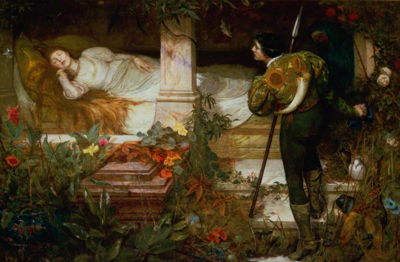
The extended slumber of the royal household magically has no side effects; they neither age nor do they lose muscle mass and become thin (Figure 1). No external traces accumulate; no dust gathers on their bodies or clothes, as theorist Teresa Stoppani notes with surprise.3 The well-known fairy tale of ‘Sleeping Beauty’ has little to say about the big sleep, except that it universally applies not only to the humans but also to the animals present at the scene, and even the wind that falls silent and motionless, excluding only the plants, which continue to grow normally.4 What counts as sleep here could be described, for the living creatures, as having their eyes closed, showing no movement, while not being dead. No dreaming activity is reported from anyone. In medical terms, normal sleep is considered a quickly reversible state, whereas coma is not. This raises the question as to whether they were actually sleeping or, rather, in a state of coma, narcosis, hibernation, or torpor.
In humans and mammals, every sleep cycle consists partly of rapid eye movement (REM) sleep, during which vivid dreaming always occurs.5 Human sleep cycles last around 90 to 120 minutes, and within each cycle four distinctly different stages of sleep ensue. Virtually all parts of the human body undergo notable changes during sleep. Within Beginning of page[p. 265] the third distinctive stage, often called ‘deep sleep’, the body slows down all its processes: breathing, heart rate, metabolism, and muscle tone are all lower than during waking hours. Therefore, the body needs less energy. However, in the final stage of each cycle — REM sleep — the pulse and breathing quicken, and the brain is as active as during wakeful activity. The emotional centre is especially active and may use up more energy during dreaming, which could explain the felt intensity of dream experiences.6Beginning of page[p. 266]
In the fairy tale’s sleep there are no cycles or dreams; a moment is simply frozen and human history — conceptualized according to the Western model of linear progression — is thereby locally suspended until it is restarted.7 Several time scales are present simultaneously: the human and animal scales have halted, whereas the vegetal time scale keeps progressing normally. The latter is magnified by a hundred years, whereby it becomes easily observable, as if in a temporal zooming in, or a slow-motion recording. When viewed from a human perspective, the temporal scale of plants is usually perceived to be much slower and may only be glimpsed with the aid of media-technological interventions like time-lapse photography, which shows the slow growth process of plants sped up. Yet, after a hundred years of no one tending to the garden and grounds of the castle, even on the vegetal scale massive changes have happened: everything is overgrown by rose hedges, and their thorns are making the castle difficult to reach from the outside.8
The introductory example of the fairy tale ‘Sleeping Beauty’ presents a speculative perspective on a local environment where everyone and everything — humans, animals, fire, and wind — are asleep. The state of extended sleep provides an ‘interscalar vehicle’ in Gabrielle Hecht’s sense, and is employed in this text as an imaginary zooming out and switching of perspectives.9 As Hecht suggests: ‘What makes something an interscalar vehicle is not its essence but its deployment and uptake, its potential to make political claims, craft social relationships, or simply open our imaginations.’ Beginning of page[p. 267] Following this proposal, the states of sleep and suspension are used as an interscalar model, analogue, and metaphor in medical experiments and treatments, and continue to propel scientific and other imaginations.10 Similarly, sleep scientist Vladyslav Vyazovskiy suggests taking an ‘alien view’ and zooming out to see that sleep and inactivity (rather than activity) on planet Earth is the primal default state of all organisms.11 Following decades of attempts in Western societies to downscale and even eliminate sleep, especially in military combat situations and to intensify capitalist production, consumption, and so-called productivity, a renewed interest in upscaling and intensifying periods of sleep can be observed both in mainstream wellness culture — in the vogue for ‘sleepmaxxing’ — and in scientific research from medicine to space exploration.12 The ever-expanding capitalist sleep-wellness economy believes in the slogan, ‘sleep better, achieve more’. In this way, the identification of waking time as productive time and hours spent sleeping as unproductive time is disturbed. This connects to the question: What are dominant temporal scales, and how do humans measure and experience time?
In the everyday and everynight, the predominant subjective feeling is of an ongoing presentism, often called the ‘river of time’, which is considered a construct of human perception and modelling of the brain. Since Albert Einstein’s theory of relativity, space and time in physics have been conceptualized as united in four dimensions called ‘space-time’. Stephen Hawking posits: Beginning of page[p. 268]
There are at least three different arrows of time. First, there is the thermodynamic arrow of time, the direction of time in which disorder or entropy increases. Then, there is the psychological arrow of time. This is the direction in which we feel time passes, the direction in which we remember the past but not the future. Finally, there is the cosmological arrow of time. This is the direction of time in which the universe is expanding rather than contracting.13
Einstein’s theory has little relevance for the everyday and everynight perception of time, which can be suspended during sleep, when brief moments of wakefulness lasting less than five minutes are not remembered. Conversely, as any insomniac will attest, if sleep is not forthcoming, it may seem as if time stretches during the night and does not pass, or as if it passes too quickly and one has to get up again ‘without having slept a wink’.14
Micro and Macro

Even though sleep is a recurring state, necessary for survival and universally occurrent for all species on Earth on the macroscale, with two billion humans sleeping at any given time on the planet,15 it is predominantly discussed in terms of subjective micromanagement on the scale of the individual, and of the everyday and everynight, through medication, cognitive behavioural therapy, and the promise of sleep-inducing gadgets of the wellness-industrial complex. A smartwatch ad in 2025 proclaims, ‘Train your sleep’, showing a full-body shot of a physically fit young man, who fills the frame and smiles (Figure 2).16Beginning of page[p. 269] The optimization of individual sleep schedules has become a mainstream desire. The ad assumes that the public already knows that sleep is important for athletic performance and many other things during the day. Another tech company advertises its own smartwatch with the image of a young woman running and, in a comical twist, being Beginning of page[p. 270] followed by her bed, which seems to be trying to catch her, further implying that only this watch will help her stick to her exercise goals and that her bed is the enemy to be avoided. At the same time, however, not only does nightly behaviour influence daily performance, but, as many sleep doctors now argue, a good night’s sleep is built through certain behaviours and activities during waking hours.
Sleep, its quantity and quality, is a recurring macro-scalar behaviour and necessity, influencing everything from economic output to public health and social behaviour on a planetary scale, and vice versa. At the same time, sleep’s quality and quantity are notoriously hard to measure and likely also influenced by the microscale — for instance, microbes in the gut and the so-called ‘gut-brain axis’.17 Planetary macro-scale events like climate change mean that higher temperatures during the night, in longer summers, are already making it harder for people to sleep, and, among other consequences, lack of sleep leads to increased aggression. As Nikolaj Schultz sums it up: ‘It seems the Anthropocene is not a nice place to sleep.’18
To put someone else or oneself to sleep instantly, to make that sleep longer and deeper or shorter, is always a god-like gesture and involves alarm clocks and power, or magic and sedating substances. Forced controlled sleep onset usually requires an anaesthetist in a clinical setting, but can also take place at home.19 A more benign Beginning of page[p. 271] example is parents, babysitters, or nannies trying to soothe children and make them fall asleep at certain times (which is a science in itself).20
To withhold sleep is recognized as a form of torture. Furthermore, societies and institutions regulate who can sleep when and for how long, as indicated by work schedules and rules for factories, hospitals, and their nightshift workers. Colonized people were forced to adhere to the ‘master’s clock’ and cast in racist terms simultaneously as ‘lazy’ — sleeping too much — and as needing less sleep.21 And yet, ‘sleep has no master’, as Amber J. Musser writes, quoting an incidence of passive resistance and alluding to sleep’s quality of escaping control and overcoming the subject.22 Because sleep, like food and air, is an essential need, sleep states can only be regulated and (self-)optimized to a limited extent. Yet, capitalist timetables generally demand ever-longer periods of production and even, through the use of shift workers, constant production. They may try to also prescribe normative periods of sleep and rest in order to enhance workers’ efficiency, since tired workers make mistakes. Most accidents and deaths happen at night, between around 2 and 4 am. Employees and soldiers in combat deployments, who have to stay up all night and against their circadian rhythms, are prone to many detrimental health effects.23 Usually, the Beginning of page[p. 272] jobs with the most gruesome hours are not well paid and are done by people disadvantaged though their gender, class, and race.24 It is a privilege and freedom to determine one’s own sleeping time and length, and to feel safe during sleep.
When measuring length and quality of sleep, human science usually compares animal sleep to human sleep, which is often taken as the (unacknowledged) norm. And yet, animals show a fantastic diversity of sleep states depending on their habitats, group behaviour, and other factors. Scientists are now using animal sleep and states of suspension as a model to modulate sleep.
Hibernation and Torpor: Sleeping like Bears (or Lemurs) and Flying to Mars
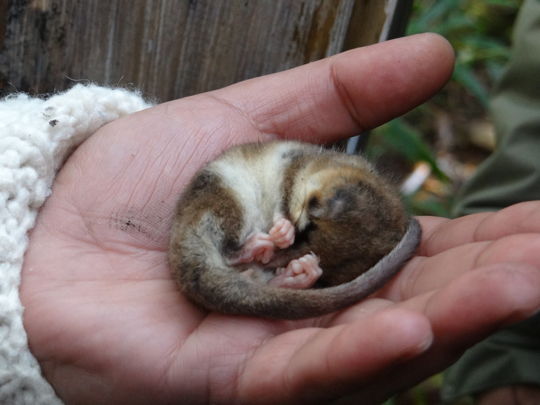
While one hundred years might seem like an extraordinary length of time to just be asleep, shorter periods of inactive and dormant states during colder seasons are widely known — at least throughout the animal kingdom. The terms ‘hibernation’ and ‘brumation’,25 as well as ‘torpor’, are often used interchangeably in everyday language, without their proper biological differentiations: hibernation occurs in hedgehogs, bats, dormice,26 and marmots, whereas torpor is for bigger mammals like bears and deer.27 Some smaller mammals can enter states of torpor that last for shorter periods of time (Figure 3). The key similarity of all three states, and even regular sleep, is the slowing of the animal’s metabolism. The key difference between real hibernation and states of torpor is the change in core body temperature: in real hibernation the animal drops its core body temperature and sustains itself in a burrow with a low ambient temperature, whereas in torpor Beginning of page[p. 274] the body temperature only drops a few degrees and the animal can wake up rapidly.28
There exists one primate who hibernates for up to seven months of the year: the fat-tailed dwarf lemur, a species endemic to Madagascar.29 While the temperature there does not drop below freezing, there is a shortage of food in winter, the dry season. Following their instincts, the lemurs feast on the available food during the summer months and store these calories in their tails for their fasting periods. During their hibernation, the little mammals downscale their energy consumption and may only take one breath every ten minutes, their heart beating only six times per minute and their body temperature falling to match that of their environment.
All animals that hibernate or enter torpor experience brief periods of interbout arousal, where they wake and need to warm their bodies back up. For the lemurs, this happens every six to twelve days of their months-long hibernation, and lasts for up to twenty-four hours. Surprisingly, the lemurs need to also catch up on sleep during the interbout arousal, and specifically on REM sleep — dream sleep. At the same time, the lemurs may even rejuvenate their cells during hibernation, as researcher Marina B. Blanco argues while describing the processes of hibernation on the microlevel of the genes, giving the notion of ‘restorative sleep’ a genetic and micro-scalar dimension.30 Because the lemurs are primates, their genome is more similar to the human genome than that of other mammals, making them the ideal animal to study. Sleep researcher Vladyslav Vyazovskiy suggests that, rather than hibernation being a special trait that only some animals possess, in fact all common ancestors of Homo sapiens were able to hibernate. On his account, humans lost this ability at some point during prehistoric times as a result of learning to use fire for cooking and Beginning of page[p. 275] heating as well as to build huts and shelters.31 Evidence still exists on the genetic level in humans and non-hibernating mammals, since the genome contains information on how to hibernate, even if this ability is not expressed or ‘switched on’.32
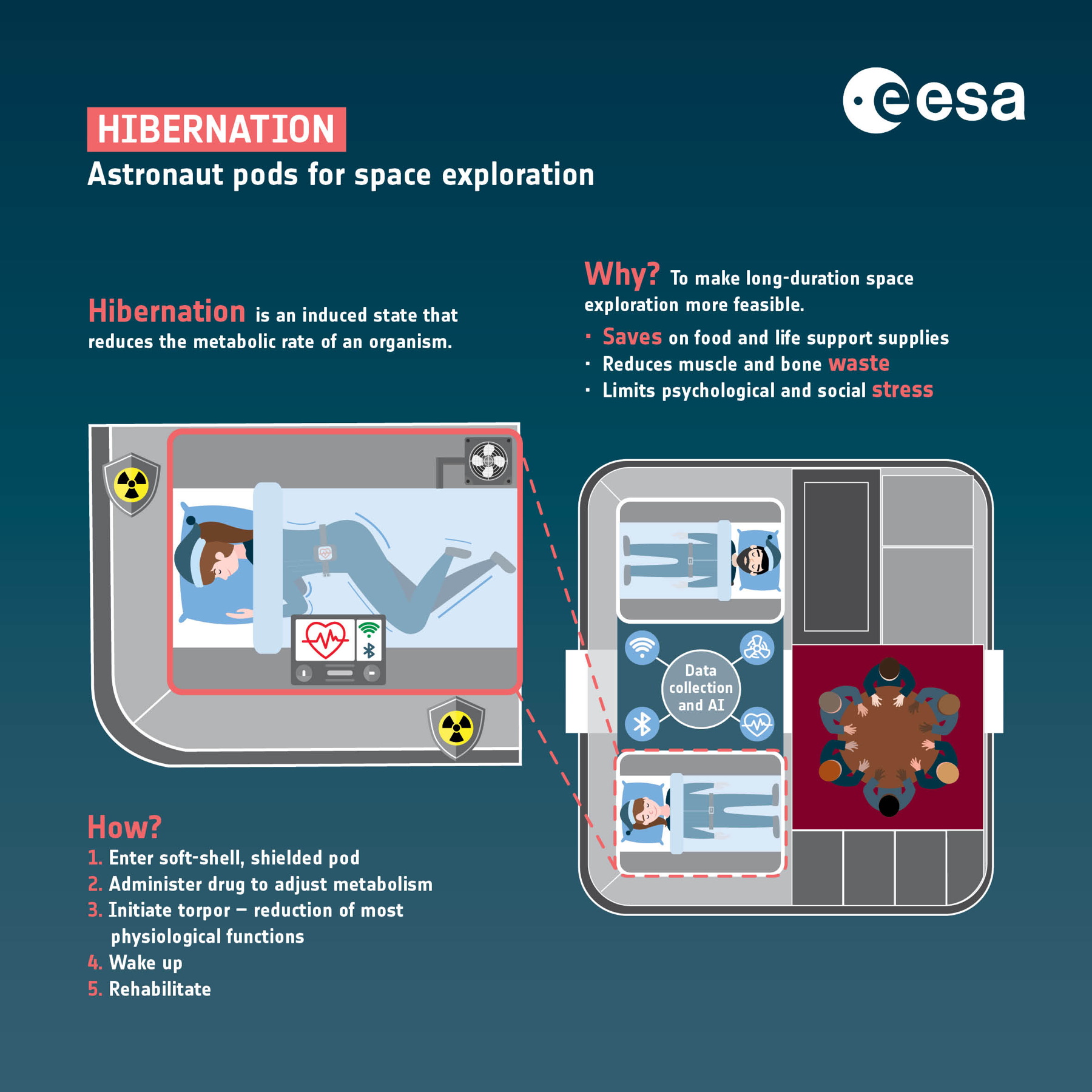
A rocket-powered flight from Earth to Mars takes about seven to nine months, a time period that a lemur could spend almost exclusively in torpor. In contrast, astronauts would require almost two years’ worth of food, water, and oxygen for a short stay and return flight. So far, only exploratory flights with robotic equipment and without human or animal passengers have been undertaken. Planet Jupiter is even further away — with current technology, a flight might take five to seven years. Could astronauts be put into a long-term sleep state during space flights lasting for several months or years?33 NASA began research on related questions in 2014 and some field trials are running to induce a state similar to hibernation, with the possibility of reducing energy consumption by as much as seventy-five per cent. The European Space Agency (ESA) is exploring this, too (Figure 4), since: ‘a very high amount of payload will be dedicated to essential life support such as food, water, air, waste-elimination and recycling. In addition, the crew is prone to stress and stress-related neuro-behavioural impairments by long-duration travels within a small and confined compartment.’34 ESA researchers are investigating how to learn from animals’ hibernation: ‘A potential game changer in these strategies is the reduction of the physiological requirements of astronauts, through artificially-induced states resembling natural states of Beginning of page[p. 277] torpor as during hibernation either continuously of long duration or intermittently.’35
Often, the speculative vision of hibernating astronauts is visualized through their resting in a coffin-like pod, which is transparent, as in the fairy tale ‘Snow White’, and which looks like an encased, sterile operating table, and not like a comfortable bed. Of course, astronauts in hyper-sleep would still need some energy and oxygen. In current medically induced comas, patients are commonly fed intravenously and their vital functions need to be closely monitored. In addition, scientists aim to induce a torpor-like state in healthy, sick, or injured humans in the future in order to rejuvenate human bodies, and to gain time and slow cell death during medical emergencies, such as after a stroke or a heart attack, or even while waiting for an organ transplant. Yet, humans are not as well adapted as animals, and if they are put into longer than normal sleep states beyond the realm of fairy tales, they will need considerable care during these periods to survive well and to fully wake up again.
One key concern for any human state similar to torpor is how to protect the functioning of the brain. Counterintuitively, REM (dream) sleep may play an important part in this, since the only hibernating mammal, the dwarf lemur, wakes up intermittently and shows evidence of some REM sleep periods. Therefore, contrary to what humans might expect, the animals are sleep-deprived when they come out of hibernation and need to catch up on REM sleep. Moreover, the lemurs let their body temperature drop, while a loss of body temperature in humans stimulates the shiver reflex. Therefore, only heavily sedated humans can be cooled down medically and usually only to between 32 and 36 °C. This has only been done for periods of time shorter than a months-long space flight; the method is called ‘therapeutic hypothermia’ and it has shown to bring favourable outcomes to patients suffering from cardiac arrest and global ischemia.36
Bears may, in this regard, provide a better model for human torpor than the lemurs, since they only enter a state of torpor, while Beginning of page[p. 278] also maintaining a body temperature above 30 °C, ensuring that they can wake up rapidly if provoked. Bears become insensitive to glucose levels during their winter torpor, with the suspension of regular feeding.37 Surprisingly, bears do not lose muscle mass during their periods of inactivity, whereas bed-bound ICU patients immediately become weaker through immobility. Doctors and scientists of physiology therefore believe that if the decline during treatment could be slowed, or even reversed, this could revolutionize medicine and the treatment of humans in intensive care.38 However, medical experiments involving putting patients in prolonged sleep states — which one could call ‘upscaling’ or ‘intensifying’ sleep — are neither a new idea nor are they relegated only to the realm of fairy tales or science fiction; indeed, they have been undertaken since the 1950s, though they are seldom remembered in current discussions, mainly because they involved psychiatric patients and focused primarily on mental regeneration and healing illnesses, as well as on changing behaviours.
Sleep Rooms
Starting in the 1950s, many psychiatric hospitals established the notorious ‘sleep rooms’,39 where patients were treated with prolonged artificially induced narcotic states, supplemented with electroconvulsive therapy (ECT) and insulin therapy.40 The sleep room treatments (and some might argue that they were a form of sedation rather than treatment) were introduced after a move away from Sigmund Freud’s Beginning of page[p. 279] talking cure in medical and psychiatric discourse on mental illnesses after World War II. At this time, several doctors and psychiatrists considered the brain to be the location where mental illness was caused, and wished to work on it directly, as they would with any other organ, by ‘re-setting’ it. The patients had widely differing diagnoses, including anorexia, hysteria, suicidality, and drug addiction, while some were simply considered ‘maladjusted’.
In Great Britain, the psychiatrist William Sargant administered ‘continuous narcosis’ to hundreds of women in London’s Royal Waterloo Hospital between 1964 and 1972, describing the procedure in stridently positive terms:
With the advantage of very high nursing standards, and an attitude of mind prepared to take calculated risks to get every patient well, we have even developed a new method of combining continuous narcosis and electric-shock therapy with both groups of anti-depressant drugs […], all often given at the same time.41
The upscaling of sleep was thus accompanied by a cocktail of other medications and ECT. The sleep room, where the patients spent most of their time, was kept in permanent darkness. Its occupants were treated by Sargant without their consent, and the heavy and continuous sedation of the treatment itself made any resistance almost impossible. The medication included the antipsychotic Largactil, sodium amytal for sedation, and two different types of antidepressants. Nurses and visitors remember the packed quarters of women in continuous sleep, and the stench of their unwashed bodies, as well as the haunting views of their immobility, looking as if dead. One nurse recalls that the women seemed like ‘zombies’ and that they were ‘drugged up to the eyeballs’; when woken up to be fed and cleaned, they were unable to follow a conversation. As a result of their medication and lying in bed without any movement, the women suffered from constipation and other metabolic, physiological, and cognitive complications, leaving them sicker upon release than before the start of the treatment. Beginning of page[p. 280] At least five patients died, while many others were traumatized after their release and grappled with life-long consequences.42 Conversely, Sargant proudly referred to his therapy as ‘a factory reset’, thus following the presumption that the mind and brain work mechanically, just like a machine that needs to be shut down and restarted, and likening young women to malfunctioning equipment.43 However, Sargant was not an outlier, and similar courses of treatment were conducted in Germany,44 Austria, Italy, and most Commonwealth countries, as, for example, in Australia, New Zealand, Canada, and apartheid South Africa.45
Criticism of Sargant’s and others’ sleep rooms, of course, should not diminish the fact that sleep is widely considered restorative and conducive to the successful treatment of all mental, psychosomatic, and physical illnesses. Significantly, other experiments attempted to condition patients through environmental and auditory cues to fall asleep, in order to lessen the reliance on pharmaceuticals. Frantz Fanon and his colleagues recount that in the clinic of Saint-Alban, in 1951, two sleep rooms were set up that accommodated only two patients each: ‘Our study’s goal was to bring into focus a sleep therapy that makes conditioning possible, and to establish whether this technique permits a reduction in sleeping medications.’ Importantly, the periods of sleep did not exceed a day, male patients were included, and the results and descriptions are far more nuanced and careful in drawing their conclusions.46 Sleep treatment was not used for simply tranquilizing Beginning of page[p. 281] patients, but carried out together with other treatments and group therapy interventions.
While, in the current age of the so-called wellness-industrial complex, people are usually referred to sleep clinics due to insomnia, because they cannot sleep as long or as well as they would like to, fictional scenarios, imagined by authors as different as Georges Perec in 1967 and Ottessa Moshfegh in 2018, detail what it would be like to upscale one’s individual sleep as a self-chosen activity or self-prescribed therapy, and to upset the rhythm of the everyday and everynight by trying to totalize the everynight.47
A Man Asleep: Upscaling Sleep as an Escape and Estrangement Tool
Georges Perec writes in 1967 about a nameless young man, a student of sociology, twenty-five years of age, who stops following his everyday routine and begins to mostly sleep. The man becomes a fugitive from the world and sleep becomes his refuge. His behaviour does not come across as protest; he just stops getting up and keeping time.48 He is addressed as ‘you’, so the reader can either find themselves in the address or read it as about someone else.
You only go out after nightfall, like the rats, the cats and the monsters. […] Sometimes you walk all night, sometimes you sleep all day.
You are a man of leisure, a sleepwalker, a mollusc. […] [Y]ou do not really feel cut out for living, for doing, for making; you want only to go on, to go on waiting, and to forget.49
The protagonist seems to move through Paris like a ghost or a zombie, a sleepwalker with open eyes but whose mind seems, to an extent, to Beginning of page[p. 282] be shut off. He is compared to a spineless animal — a mollusc that crawls through the streets alone. Of course, this is still, to a degree, a privileged and voluntary withdrawal: the man still eats and does not lose his appetite, meaning that he must receive a regular student stipend from his parents or the state. Sigmund Freud had already noted that both emotional pain and physical pain are drivers of a subject’s narcissism and of their losing interest in the world, due to their focus being reduced solely to their pain. This narcissistic state — in Freud’s description, ‘ein narzisstisches Zurückziehen der Libidopositionen auf die eigene Person’ — is related to sleep and the wish to sleep continuously.50 In a more neutral reading, building on Merleau-Ponty, Angelica Stathopoulos suggests that ‘[s]leep expresses a way of being indebted to passivity, a different modality of perceptive life’.51 Perec’s nameless man registers how his perceptions change, and how he loses his sense of time, his social life, his friends, his studies, and finally his sense of self, too:
Your alarm clock has been showing five-fifteen for a long time now. […] Time no longer penetrates into the silence of your room, it is all around, a permanent medium, even more present and obsessive than the hands of a clock that you could choose not to look at, and yet slightly warped, out of true, somehow suspect: time passes, but you never know what time it is […]. It is ten o’clock, or perhaps eleven […], it’s late, it’s early, the sun rises, night falls, the sounds never quite cease altogether, time never stops completely, even if it is now reduced to the merely imperceptible: a hairline crack in the wall of silence, the forgotten murmur of the drip-feed, almost indistinguishable from the beats of your heart.52
In the process of escaping into sleep and passive refusal, he observes himself with a removed clinical gaze, almost neutrally, as he does not care any more about the everyday time scale, or what Hawking calls the ‘psychological time arrow’, and ignores both his own circadian rhythm Beginning of page[p. 283] and those of other people. Thus, time is no longer an arrow of progression, but rather mashed together, incoherent, a burden. Next, the man loses his memories and his language; even though he can and does still read sometimes, he no longer privileges content or understanding, so that it becomes a mere mechanical exercise, a waiting game:
You are still capable of being amazed by the way in which the combination, according to a few ultimately very simple rules, of thirty or so typographic signs is able to generate, every day, these thousands of messages. But why should you eagerly devour them, why should you bother deciphering them? All that matters to you is that time should pass and that nothing should get through to you: your eyes follow the lines, deliberately, one after the other.53
The man, who is often asleep, does not use medication. He seems to first simulate and then to successfully establish some elements of sleep in his waking hours, since he has taught himself to be numb and indifferent, and to take no interest in anything. This in turn seems to create a feeling of mental distance and passivity, as if he is almost dead, as if nothing is real, or as if he is in an endless confusing dream that he cannot leave. Perec, a Jewish-French author, later admitted that his story of complete alienation is in part autobiographical.54
As his suspended state progresses, the man, after describing an almost liberatory contentment, or at least a calmness, in his indifference, lets on that it is harder than he has said, and that sometimes he cannot fall asleep:
As free as a cow, as a mollusc, as a rat!
But rats don’t spend hours trying to get to sleep. But rats don’t wake up with a start, gripped by panic, bathed in sweat. But rats don’t dream and what can you do to protect yourself against your dreams?
But rats don’t bite their nails, especially not methodically, for hours on end.55Beginning of page[p. 284]
The narrative of the nameless man is entirely unheroic, and in this comparison to objects and animals his humanity seems lost and without value. In the end, he seems to get better, coming out of his long, shapeless dormant period and reconnecting with the world around him. Importantly, pace Perec’s narration, rats dream, too — as it is assumed that all mammals do.56 Rats have often been used as lab animals by sleep scientists. One landmark experiment by neuroscientists Daoyun Ji and Matthew Wilson showed that rats that run through a maze during the day will dream at night of these movements.57 Therefore, animals’ dream content includes the day’s residues, just as it does for humans, what Freud called the Tagesrest.58 The results of these experiments reveal some universal similarities between animal and human sleep stages; they are used to piece together the role of sleeping and dreaming in neurological operations like memory retrieval and memory consolidation.
Sleeping for One Year: A Self-Experiment
‘I’ll be here hibernating.’
Reva rolled her eyes. ‘It’s natural,’ I told her. ‘People used to hibernate all the time.’ ‘People never hibernated. Where are you getting this?’59
An unnamed female narrator, in some ways echoing Perec’s protagonist’s narcissistic inward turn, has this exchange with her only remaining social contact in the year 2000, before popping some NyQuil sleep medication and drifting off. Ottessa Moshfegh wrote this novel, whose narrator administers her own sleep treatment for one year, as a self-reductive therapy. Ironically, the story is set in New York City — the city that never sleeps. Yet, the narrator chooses passivity and rest, Beginning of page[p. 285] instead of actively building a life as an economically secure heiress: white, blonde, conventionally good-looking, and with a college degree, her own apartment, and income from her heritage. While Moshfegh imagines a singular case, in the US many people take sleep medicine every night; the prescription drug Ambien was taken by 2.4 million people in 2023, attesting to this large-scale usage.60 It is taken more often by women than men.61
Building on Freud’s description of sleep as a blissful state combining narcissism and hallucinatory wish-fulfilment in dreaming, the psychoanalyst and author Jamieson Webster asks: ‘Who would not wish for this? Why don’t we all just sleep all the time?’62 Moshfegh’s character seems to have reached a similar conclusion and so she self-medicates, preferring the state of sleep and unconsciousness over being awake. Over time, the narrator intensifies and elongates her sleep periods, aided by ever-stronger sleeping pills and other pharmaceuticals prescribed by a psychiatrist, to whom the narrator lies about her allegedly crippling insomnia.63
In the process, the protagonist grows weaker and weaker, stops leaving her apartment altogether, and then employs an artist to provide her with food in the brief periods of wakefulness she allows herself. She does not remember her dreams, but invents disturbing dream content for her psychiatrist, to satisfy her need to put some information into her patient file.
The story borders on the absurd and speculative, purposefully creating an abject female lead character. It is also a formal and narrative experiment in how to tell a story where ‘nothing’, or at least very little, happens. At the same time, Moshfegh takes several proven medical facts into account. The narrator loses muscle mass during her long Beginning of page[p. 286] periods of sleep, which she tries to counteract by exercising a little in her brief periods of wakefulness, during which she also eats and drinks. Some of the sleeping pills lose their strength, as she takes them regularly and in larger doses than is recommended; as a result, she has to repeatedly ask for stronger and different sedatives. Her mental and social abilities decline sharply.
With her self-prescribed sleep therapy, the protagonist undoes herself, similarly to Perec’s nameless man. And yet, even regular sleepers may already experience dream states as evidence that the self and the inner conception of a rational mind are not fixed and solid: dreams provide a nightly shortcut to experiencing oneself as other — for example, in nightmares, where one is both victim and perpetrator.64 In Moshfegh’s tale, the protagonist, while maximizing and intensifying her sleep periods, and thereby unravelling her identity and her previous life, does not change much on a physical level: her body still remains pretty, in the most stereotypical sense — ‘thin and blond’, no matter what she does. By contrast, Sargant’s former patient Mary Thornton recounts her ordeal in the sleep room thus:
I have no recollection of leaving there after three months, or who came to get me, or anything. It must have been my parents. My memory was in pieces completely. I had even forgotten I had a boyfriend, which was very convenient, as they had told him he was never to attempt to see me again.65
Her appearance also changed completely, as she discovered in one of the occupational therapy sessions that she joined only in order to be released: ‘I only remember one: learning how to put on make-up. I looked like a freak when I saw myself in the mirror.’66 Moshfegh’s protagonist, on the other hand, retains her good looks, like the princess in ‘Sleeping Beauty’, and thereby remains partly in a fairy tale narrative. At the same time, Moshfegh’s novel could be seen as a contemporary blueprint of auto-reduction, of a young, educated woman’s refusal to participate in society and to do what is expected of a woman of her class.67Beginning of page[p. 287]
The ending of My Year of Rest seems to imply the narrator embracing her existence as she slowly begins a wakeful life again, leaving her apartment to sit in the park and feed squirrels.68 ‘My sleep had worked. I was soft and calm and felt things. This was my life now.’69 Therefore, the narrator evaluates her self-reductive sleep therapy as some kind of success, and so discontinues it. The reader may have followed the story hoping for the narrator’s survival and for a change in her frustrating state — either her death or an end to the intensified sleep. In a sense she is a postmodern Bartleby insisting on her preference not to act, and because she is a privileged woman, this does not come across as victimhood.
Broadly speaking, feminist theory has, on the one hand, tried to reframe passive states as positive and to escape the binary of feminine passivity versus masculine activity, while, on the other, it has sought to reveal what have been thought of as passive states as more complex and significant than this descriptor suggests.70 Moshfegh’s thought experiment, of an intensification of human sleep into a state similar to animal hibernation, could be analysed as pursuing the latter, and yet it does not fit neatly into a narrative of passive empowerment, nor simply of melancholic self-diminishment.
Intensifying Sleep: Anaesthesia and Abuse
The medical solution of ‘sleeping’ through uncomfortable events has a long history and is common practice during surgeries and operations under general or partial anaesthesia, where patients are seemingly ‘asleep’, unresponsive, and numbed. Yet, there exist reports of patients having been partially aware of what the doctors did to them, or who felt pain during the procedure. The brain under general anaesthesia still registers sensory stimuli, even if the subject usually does not remember Beginning of page[p. 288] this.71 Significantly, even patients who had to be intubated and were put into a medical coma with severe cases of Covid-19 sometimes reported disturbing bad dreams following their recovery. Some dreamt, for example, that the doctors and nurses were kidnapping and torturing them. All this points to the fact that the brain can remain ‘awake’ and active to an extent even in rapid onset, artificially induced states of general anaesthesia and coma, and not only in the fourth stage of ‘natural’ sleep, with its tell-tale rapid eye movements.
In Moshfegh’s novel, the female psychiatrist stops short of prescribing full anaesthesia to the narrator, yet doctors have done so in real life, administering strong sedation to heighten the intensity of sleep and the speed of sleep onset. These cases are only publicized when the patient does not wake up and is in fact killed by the treatment: one case of a man with severe insomnia who begged his private doctor to ‘help him sleep’ is Michael Jackson. Jackson wanted or needed the anaesthetic Propofol each night; he was no longer able to sleep without it and called it his ‘milk’.72 Because the administering of Propofol, together with a cocktail of other sedatives including Lorazepam and Midazolam, killed the fifty-year-old Jackson in 2009, the case became widely discussed in the media.73 In the ensuing lawsuit, his doctor was found guilty of negligence, since he had not checked Jackson’s heartbeat and breathing, as is procedure for the use of Propofol in short surgical operations.
Significantly, the scenario of an unresponsive, passive body, seemingly waiting for or inviting (sexual) action, lying dormant until an actor awakes or uses it, exists as the ‘sleeping woman’ trope in pornography: a staged scene where a woman pretends to sleep, but in fact waits for the man to initiate and then takes part in sexual acts.74 This subgenre differs from the real case of Gisèle Pélicot, and yet there are Beginning of page[p. 289] uncanny overlaps, since fantasies of entitlement and total domination seem to be part and parcel of both. In the aftermath of the Pélicot case, several misogynist internet communities have come to light and have been scrutinized, where men exchange detailed information on how to secretly drug and rape their partners — for example, where to order the sedatives, and their dosage. Often, videos are shared in which the eyelid of the sedated person is pulled up, thereby proving that they are really asleep (that is, sedated).75 Questions of consent and of whom one can trust in a semi-conscious or unconscious state are inextricably entwined, but they cannot be directly addressed in such a state. This bears on the philosophical question as to whether the state of subjecthood is absent or suspended in sleep, as well as related questions of perception and self-knowledge, since sleepers and dreamers are only partly conscious, and a sleeping person can neither deny nor affirm their state directly.76 This underlines both the great difficulty of gaining direct access to knowledge about sleep states, on account of sleeping subjects’ reduced ability to speak, act, or resist, as well as the intense vulnerability of resting, exhausted, or drugged and comatose bodies. These vulnerabilities appear obvious in hindsight, but seem to have been of little concern in historical psychiatric treatments that tried to intensify sleep or even keep patients asleep continuously.
The Sleeping Beauty Trope
The young woman in ‘Sleeping Beauty’ remains beautiful, and as if dead, for a hundred years. This is a common scene, as Elisabeth Bronfen notes:
Narrative and visual representations of death, drawing their material from a common cultural image repertoire, can be read as symptoms of our culture. Furthermore, because the feminine body is culturally constructed as the superlative site Beginning of page[p. 290] of alterity, culture uses art to dream the deaths of beautiful women.77
Death and sleep are linked, often in an imagined kinship as brothers, and one may be mistaken for the other at first sight. The term ‘sleeping’ is commonly used as a euphemism for ‘dead’. Some of the same cultural and aesthetic conventions are at play in representations of both dead and sleeping women, as can be revisited in the iconic scenes of Sleeping Beauty, and in Snow White, too, in each of which a young and beautiful woman who at first appears dead turns out to have been ‘only sleeping’.78 These tales may reassure us by taking the finality and horror of death away, but they also expose a beautiful female body voyeuristically to the visual consumption of spectators, and, significantly, with her eyes closed, she cannot return the gaze. The awake spectator may, either imaginarily or for real, take advantage of this situation by touching the unresponsive body, or more.
While in the tale of ‘Sleeping Beauty’ the whole castle and its inhabitants are fast asleep, in 1992 the science fiction author Ursula K. Le Guin reimagined the well-known tale with a young peasant as the main protagonist, ‘the Poacher’, who hacks his way through the thorns and branches into the castle grounds. In the author’s words: ‘He does not break the spell; that is what the prince will do. He has broken into the spell.’79 The story proceeds with some significant differences and further considerations on the magic sleep state: it is not contagious; the young man remains in his own wakeful subjective time scale and with his own psychological perception of time. But the poacher is certain — in another alteration to the Grimms’ telling — that the princess is the only one, besides one of the hunting dogs, who is not only sleeping, but also dreaming. And yet, the two states are neither fully discrete nor monolithic, and even under the influence of narcotics, or in this case magic, the brain may not be completely switched off, and the Beginning of page[p. 291] ears continue to receive sounds.80 Dreams and nightmares can occur, which sometimes incorporate auditory cues.81 Le Guin’s protagonist wanders the grounds and encounters only motionless humans and resting animals, realizing that, in spite of the pervasive sleeping, ‘there was no night there’.82 He eats and drinks what he finds, and these supplies are replenished each time he returns.
Among the sleepers is a young peasant couple; having made love in a nearby meadow, their clothes are still pulled down. The poacher, who takes what he desires without asking, has repeated intercourse with the quasi-unconscious woman; she is unable to consent, but Le Guin imagines that she welcomes and enjoys his action, and she does not name it ‘rape’.83 In Le Guin’s story, however, the poacher never touches the princess, since, unlike in traditional fairy tales, his class consciousness is not suspended.
‘Sleeping Beauty’ on a Spaceship in 2016
Connecting my earlier themes of space travel and cosmic temporal scales with animals’ intermittent modes of suspension, human astronauts’ vulnerabilities, and the trope of dormancy, I now want to turn to a Hollywood sci-fi film which retells scenes from the #MeToo protests of 2016 in the setting of futuristic space exploration. In Passengers, released in 2016, an enormous spaceship, modelled after a luxury cruiser, Beginning of page[p. 292] sets out to colonize a distant galaxy to create a new habitat.84 It carries five thousand paying passengers and three hundred crew members who are travelling for 120 years in hyper-sleep to the Bhakti star system. Thirty years into the flight, a man wakes up due to a malfunctioning sleep pod and is greeted by a hologram telling him, ‘It is perfectly normal to feel confused after 120 years in suspended animation.’ The projected arrival is, however, still ninety years away — longer than a human lifespan — and he is the only one awake.85 The scene is comparable to Le Guin’s retelling of ‘Sleeping Beauty’, whose male protagonist spends most of his life in the bewitched castle, watching and talking to the sleepers, who never respond: ‘I saw […] that the two carved figures by the door were living men […] sound asleep. It did not surprise me. They are asleep, I thought. It seemed natural enough, here. I think I knew even then where I had come.’86
Both men know that they will be dead before the other sleepers wake, so they will never actually meet. This perspective cements the notion of the sleeper as absent presence or present absence, a passive body, in which the active and individualized subject is temporarily away. In both scenarios, the men become increasingly frustrated and lonely: ‘the company of the sleepers grew wearisome to me.’87 Being awake means complete isolation and exclusion from the collectivity of sleepers. Roland Barthes emphatically describes a similar frustration in watching the beloved other in their sleep, completely unreachable.88 However, such an experience may also be useful as a way to instil recognition of the immensity of sleep, and its pervasiveness, that which each (non-)sleeper can only observe while not partaking in it, and as a way to imagine switching perspectives between sleepers and non-sleepers, passivity and activity.
To return to the Hollywood film Passengers, its main protagonist, the lonely and awake man, Jim, cannot bear his solitude, and, after Beginning of page[p. 293] one year has passed, he wakes up another female passenger, Aurora, repeating the ‘Sleeping Beauty’ narrative in a different guise. By waking Aurora deliberately, and too early, by short-circuiting her sleep pod, Jim has made it impossible for her to arrive at the destination: she will die (as will he) in transit. In addition, Jim lies about the reason for her awakening. As she comes to realize what has happened, all she wants is to go back into hibernation, which is impossible. Not surprisingly for a Hollywood narrative, and despite Jim’s actions, the only two awake humans proceed to fall in love with each other. However, when Aurora finally finds out the details of her awakening, through the divulging remark of an android, she confronts Jim and moves to a different part of the ship, cutting off communication with him. In online film forums, many viewers have remarked that they would have preferred the film to have been told solely from Aurora’s perspective. While the imaginary scenario in Passengers builds on well-known tropes from ‘Sleeping Beauty’, it also exploits current experiments into the upscaling and intensification of human sleep to a mode of ‘hibernation’ on long-term space flights, mirroring research that is currently being pursued by NASA and ESA, though so far only in clinical trials on Earth.
Conclusion
This essay has considered both historical and literary examples of attempts to intensify and upscale sleep. I have strategically employed sleep as an interscalar vehicle and an umbrella term for a wide variety of reduced and seemingly passive states ranging from regular sleep to suspension as well as to hibernation and torpor, all of which are connected by their common trait of energy reduction. This wide perspective has aided in decentring the human scale, and the dominance of the active everyday as a norm. The simplistic notion of sleep as a scalable entity for energy conservation and production, as exemplified in the ‘Sleeping Beauty’ trope, is called upon in diverse contexts from fictional literature and films to implicit notions informing metaphors and models in science. Interrogating this trope, this essay has revealed it to be a myth that just won’t die, and that continues to live on, even through paradigm shifts in sleep science, in capitalist optimization discourses and their counter-tales. Beginning of page[p. 294]
The answer to the question of whether (human) sleep is scalable depends on the definition of sleep: while, theoretically, nothing can compress time spent in sleep and still yield the same regenerative benefits, a myriad of practices to shorten or delay sleep, or to make it more efficient, exist in the military and among night shift workers, students, young parents and other carers, as well as stockbrokers. While these groups (and others) are known for not getting enough sleep, the test case of astronauts being put into a medically induced hibernation state for months-long space travel suggests a stretching of the temporal scale, and a potential upscaling or intensification of sleep beyond circadian rhythms. Moreover, while every human’s sleep habits and needs are as individual as their dietary needs, some general insights may be drawn: longer periods of sleep may lead to an estrangement of the rhythm of the everyday and everynight, and a disintegration of the (always already multiple) subject. In the few cases presented here, some of the difficulties of upscaling and intensifying sleep have already become apparent, and would need to be addressed in future efforts to maximize human sleep periods — for example, the problem of exactly timed sleep onset and offset.
The models for these longer sleep states are the various animals who are better adapted and diverse sleepers than humans, since they have a greater ability to modulate and upscale their sleep in response to their environments. The imaginary trope of sleeping for a hundred years, as in ‘Sleeping Beauty’, is at the core an efficacious model of an upscaled but reversible state of suspension that continues to be exploited across imaginary and scientific realms. It usually claims an idealized version of an intensified sleep and disregards many of the actual changes that a human body and its environment would undergo during such a period, such as the accumulation of dust, the growth of hair and nails, and physical decline. ‘Sleeping Beauty’ is therefore an aestheticized (and anaesthetized), gendered, and racialized icon; it is not at all an innocent trope, since it offers up flawless perfection, loss of agency and control, and the possibility of being violated in the vulnerable sleep state.
Notoriously, human sleep can be both an asocial or antisocial seclusion, but it can also entail a form of sociality, since humans are vulnerable in their sleep; they need care and protection and are never Beginning of page[p. 295] as autonomous as hibernating animals. It is therefore apparent that the human sleeper cannot be the master of their own sleep state, and must rely on another human’s care, responsibility, and ethical behaviour.
Anticapitalist but also to an extent antisocial or escapist, narcissistic experiments with upscaling sleep, as in Perec’s and Moshfegh’s novels, can only be performed in a secure setting, where a lockable room with a bed, financial income without work, and sustenance are all a given. At the same time, both authors’ protagonists refuse to participate in capitalism and instead aim to suspend normal life and strivings. Significantly, both protagonists counter the current trends of sleepmaxxing and sleep optimization that are consistent with a modernist notion of appropriation and mastery: the human imitating animal hibernation to become the most efficient sleeper in the universe, and exploiting this to colonize other planets.
And yet, sleep (still) escapes all fantasies of mastery. Sleep remains an enigmatic state that is difficult to measure in any exact way, and is less monolithic than previously conceptualized. Sleep may never be fully captured and conquered, and it can’t be abolished. The reduction of sleep to a mode of energy conservation does not do justice to its multiple functions, and, as can be inferred from the case of sleep-deprived animals needing to catch up on REM sleep after periods of hibernation, it comes with its own risks. Therefore, the idea of simply upscaling sleep — be it for one year or a hundred years — must ultimately fail as too simplistic and reductive.
Notes
- Jacob Ludwig Carl Grimm and Wilhelm Carl Grimm, ‘The Sleeping Beauty (Briar Rose)’, in Grimms’ Complete Fairy Tales [1785–1863], trans. by Margaret Hunt (Canterbury Classics, 26th printing, 2024), pp. 178–80. The original German title is ‘Dornröschen’. I want to thank all fellows and colleagues of the ICI Berlin, as well as others, whose comments were immensely helpful for this essay. ↵
- People unable to see, or with injured eyes, may not be able to sense the light, sometimes leading to a very different rhythm than the twenty-four-hour sleep-wake one. See Yavuz Selim Atan and others, ‘The Effect of Blindness on Biological Rhythms and the Consequences of Circadian Rhythm Disorder’, Turkish Journal of Ophthalmology, 53.2 (2023), pp. 111–19 <https://doi.org/10.4274/tjo.galenos.2022.59296>. ↵
- Teresa Stoppani, ‘Dusty Stories of Woman: Notes for a Re-definition of Dust’, in The Issues: Contemporary Culture and Aesthetics, ed. by Sue Golding (Nerve, 2005), pp. 125–32 (p. 125). ↵
- See ‘The Sleeping Beauty’, in Grimms’ Complete Fairy Tales, pp. 179. It is debatable if plants sleep, too. Many plants adapt to their environment and to seasonal temperature changes, and some, like the autumn crocus (Colchicum autumnale), retreat into the soil with their roots in winter, and only bloom in the autumn. Plants can, however, be anaesthetized, as has been proven in experiments with the mimosa (Mimosa pudica). See Vladyslav Vyazovskiy, ‘What Sleep Is’, Aeon, 14 October 2025 <https://aeon.co/essays/two-billion-humans-are-doing-something-bizarre-right-now-sleeping> [accessed 2 January 2026]. ↵
- Antonio Zadra and Robert Stickgold, When Brains Dream: Understanding the Science and Mystery of our Dreaming Minds (Norton & Company, 2021). ↵
- See Rahul Jandial, This Is Why You Dream: What your Sleeping Brain Reveals about your Waking Life (Penguin, 2024). ↵
- Conversely, the anthropologist Eduardo Viveiros de Castro described Indigenous Amazonian time scales as an ‘always already’, cyclical reproduction of time that does not follow the Western notion of progress. Amerindian perspectives of ‘mythical immanence’ do not locate myths in the past, or at the beginning of a timeline, but rather live them as an ever-present ontological reality. See Eduardo Viveiros de Castro, ‘Cosmologies and Perspectivism’, in Viveiros de Castro, The Relative Native (HAU Books, 2015), pp. 195–28. ↵
- Of course, as the story goes, the thorns only guarded the castle until the one hundred years had elapsed. Once they had, a young man from the correct class background showed up just in time, whereupon the thorns and roses made a passageway for him and let him enter, whereas others before him had bled to death. See Grimms’ Complete Fairy Tales, pp. 179–80. For a typical depiction of ‘Sleeping Beauty’, see Edward Frederick Brewtnall’s painting in Figure 1. ↵
- Gabrielle Hecht, ‘Interscalar Vehicles for an African Anthropocene: On Waste, Temporality, and Violence’, Cultural Anthropology, 33.1 (2018), pp. 109–141 (p.115) <https://doi.org/10.14506/ca33.1.05>. ↵
- Sleeping or dormancy as a metaphor can even be encountered in geological time scales, as in the description of the ‘dormant’ volcano, whose cycles of eruption may often exceed human time scales. For some aspects of dormancy, see Jasmine Clotilde Pisapia, ‘Dust, Death, and the Body of the Earth: Notes on the Scales of Ecological Disaster’, in this volume, pp. 405–27 (p. 418). ↵
- Vyazovskiy, ‘What Sleep Is’. ↵
- See Jonathan Crary, 24/7: Late Capitalism and the Ends of Sleep (Verso, 2013). On ‘sleepmaxxing’, see Eric Zhou, ‘Should You Be Sleepmaxxing to Boost Health and Happiness?’, Harvard Health Publishing, 6 March 2025 <https://www.health.harvard.edu/blog/should-you-be-sleepmaxxing-to-boost-health-and-happiness-202503063090> [accessed 20 March 2026]; and for its critique, see Nancy Walecki, ‘The Pitfalls of Sleepmaxxing: Technology Might Help You to Sleep Better, or Go Haywire’, The Atlantic, 25 October 2025 <https://www.theatlantic.com/health/2025/10/sleep-technology/684702/> [accessed 20 March 2026]. ↵
- Stephen Hawking, A Brief History of Time: From the Big Bang to Black Holes (Bantam, 1988), p. 145. ↵
- People who suffer from clinically significant insomnia often have the feeling of having not slept, even if they have done so. See Michelle Carr, Nightmare Obscura: A Dream Engineers Guide through the Sleeping Mind (Henry Holt, 2025). The lyrics to the Beatles song ‘I’m So Tired’ describe the state of having been unable to sleep for well over three weeks, and the consequences thereof. See ‘I’m So Tired’, The Beatles <https://www.thebeatles.com/im-so-tired> [accessed 2 January 2026]. ↵
- Vyazovskiy, ‘What Sleep Is’. ↵
- The ad was presented on billboards in Sydney, Australia, in 2025, as well as online. For further information on how the sleep training and tracking is supposed to work, see <https://www.samsung.com/us/support/answer/ANS10003657/> [accessed 29 April 2026]. ↵
- Zhe Wang and others, ‘Gut Microbiota Regulate Insomnia-like Behaviours via Gut-Brain Metabolic Axis’, Molecular Psychiatry, 30 (2025), pp. 2597–611 <https://doi.org/10.1038/s41380-024-02867-0>. On the multifarious connections between the microbiome and rest, see also Amber J. Musser, ‘Tamarind, Metabolism, and Rest: Making Racialized Labor Visible’, in Musser, Between Shadows and Noise: Sensation, Situatedness, and the Undisciplined (Duke University Press 2024), pp. 94–111 <https://doi.org/10.1215/9781478059097>. ↵
- Nikolaj Schultz, Landsickness (Polity Press, 2023), p. 4. ↵
- Here one immediately thinks of the Gisèle Pélicot case and similar ones that have been prosecuted publicly in court, in which predominantly men have drugged and raped their partners. See Lulu Garcia-Navarro, ‘“They All Tried to Break Me”: Gisèle Pélicot Shares her Story’, The New York Times, 13 February 2026 <https://www.nytimes.com/2026/02/13/magazine/gisele-pelicot-france-rape-case-story.html> [accessed 8 March 2026]. I discuss below some aspects of these cases and how they relate to the ‘Sleeping Beauty’ trope. The adjacent topics of sleep, sedation, and violation, however, cannot be addressed fully in this text. Many similar cases to Pélicot’s have since come to light in Germany. See, among others, Sophie Fichtner and Anne Fromm, ‘Man darf nicht zulassen, dass sie zu sich kommt’, taz.de <https://taz.de/Sexualisierte-Gewalt/!6164544/> [accessed 29 April 2026]; and ‘Intensivpfleger vergewaltigte Komapatientinnen und -patienten — zwölf Jahre Haft’, Spiegel, 28 April 2026 <https://www.spiegel.de/panorama/justiz/nordrhein-westfalen-intensivpfleger-vergewaltigte-koma-patienten-zwoelf-jahre-haft-a-f88b90ce-5f1e-4d4e-b65d-8c7cf9bd7d37> [accessed April 29 2026]. Among earlier cases, see, for instance, Tove Ditlevsen’s autobiographical account of her husband, a doctor who gave her strong opioids without medical indication, in Tove Ditlevsen, Abhängigkeit [1971], trans. by Ursel Allenstein (Aufbau, 2021). ↵
- Countless different methods and advisory books exist, often published by paediatricians. ↵
- ‘They seem to require less sleep. A black, after hard labor through the day, will be induced by the slightest amusements to sit up till midnight, or later, though knowing he must be out with the first dawn of the morning’ (Thomas Jefferson, quoted in Rasheedah Philips, ‘CPT Symmetry and Violations of Black SpaceTime’, in Philips, Dismantling the Master’s Clock: On Race, Space, and Time (AK Press, 2025), pp. 89–138 (p. 101); and Josie Roland Hodson, ‘Rest Notes: On Black Sleep Aesthetics’, October, 176 (2021), pp. 7–24 <https://doi.org/10.1162/octo_a_00422>. ↵
- Musser, ‘Tamarind, Metabolism, and Rest’. ↵
- Isabel Silva and Daniela Costa, ‘Consequences of Shift Work and Night Work: A Literature Review’, Healthcare, 11.10 (2023), article 1410 <https://doi.org/10.3390/healthcare11101410>. ↵
- On the racial sleep gap, see Hodson, ‘Rest Notes’. Class-based sleep discrimination exists even in the same workplace, as for example in most hospitals, where doctors are allowed to sleep if no patient requires care at night, in rooms equipped with cots or beds, whereas nurses are not allowed to sleep and can only take breaks sitting up. ↵
- Brumation is a state that turtles and other amphibia enter when temperatures drop. Turtles can even survive under a frozen layer of ice in a cold lake. ↵
- The dormouse (Siebenschläfer in German) even has sleep in its name, from the Latin dormīre (sleep). For the etymology, see the entry ‘dormouse’, Oxford English Dictionary, n.d. <https://www.oed.com/dictionary/dormouse_n> [accessed 18 July 2026]. ↵
- Fritz Geiser and Thomas Ruf, ‘Long-Term Survival, Temperature, and Torpor Patterns’, Scientific Reports, 13 (2023), article 6673 <https://doi.org/10.1038/s41598-023-33646-6>. ↵
- Despite this, stone age humans may have taken advantage of the bears’ reduced state of activity and hunted them when they were resting in caves. Archaeologists have found both arrows and spears in bear caves. ↵
- Marina B. Blanco and others, ‘On the Modulation and Maintenance of Hibernation in Captive Dwarf Lemurs’, Scientific Reports, 11 (2021) article 5740 <https://doi.org/10.1038/s41598-021-84727-3>. ↵
- Marina B. Blanco and others, ‘Food Deprivation Is Associated with Telomere Elongation during Hibernation in a Primate’, Biology Letters, 21.2 (2025), article 20240531 <https://doi.org/10.1098/rsbl.2024.0531>. ↵
- Adam Grant, ‘What Hibernating Animals Can Teach Us about Human Sleep with Vladyslav Vyazovskiy’, Ted.com, 18 March 2025 <https://www.ted.com/pages/what-hibernating-animals-can-teach-us-about-human-sleep-with-vladyslav-vyazovskiy-transcript> [accessed 26 December 2025]. ↵
- Elliott Ferris and others, ‘Genomic Convergence in Hibernating Mammals Elucidates the Genetics of Metabolic Regulation in the Hypothalamus’, Science, 389.6759 (2025), pp. 494–500 <https://doi.org/10.1126/science.adp4025>. ↵
- Alexander Choukèr and others, ‘Hibernating Astronauts — Science or Fiction?’, European Journal of Physiology, 471 (2019), pp. 819–28 <https://doi.org/10.1007/s00424-018-2244-7>. ↵
- Alexander Choukér and others, ‘European Space Agency’s Hibernation (Torpor) Strategy for Deep Space Missions: Linking Biology to Engineering’, Neuroscience & Biobehavioral Reviews, 131 (2021), pp. 618–26 (p. 618) <https://doi.org/10.1016/j.neubiorev.2021.09.054>. ↵
- Ibid, p. 618. ↵
- Shlee S. Song and Patrick D. Lyden, ‘Overview of Therapeutic Hypothermia’, Current Treatment Options in Neurology, 14 (2012), pp. 541–48 <https://doi.org/10.1007/s11940-012-0201-x>. ↵
- Heiko T. Jansen and others, ‘Hibernation Induces Widespread Transcriptional Remodeling in Metabolic Tissues of the Grizzly Bear’, Communications Biology, 2 (2019), article 336 <https://doi.org/10.1038/s42003-019-0574-4>. ↵
- See Tohru M. Takahashi and others, ‘A Discrete Neuronal Circuit Induces a Hibernation-like State in Rodents’, Nature, 583 (2020), pp. 109–14 <https://doi.org/10.1038/s41586-020-2163-6>. ↵
- It is important to distinguish between ‘sleep rooms’, where patients who did not suffer from sleeping disorders were put into a medicalized sleep, and ‘sleep laboratories’ for the monitoring and analysis of patients with sleep disorders. Sleep labs were only established with the emergence of sleep medicine in the second half of the twentieth century. See Hartmut Schulz and Piero Salzarulo, ‘The Development of Sleep Medicine: A Historical Sketch’, Journal of Clinical Sleep Medicine, 12 (2016), pp. 1041–52 <https://doi.org/10.5664/jcsm.5946>. ↵
- Leucotomy (or lobotomy, as it was also called) was considered if patients did not ‘improve’. This is a now discredited form of surgical operation where the connection of the frontal lobes of the brain are severed. ↵
- William Sargant, ‘Psychiatric Treatment in General Teaching Hospitals: A Plea for a Mechanistic Approach’, The British Medical Journal, 2.5508 (1966), pp. 257–62 (p. 260). ↵
- Jon Stock, The Sleep Room: A Sadistic Psychiatrist and the Women who Survived Him (Abrams Press, 2025), pp. 56–58. Several patients complained that Sargant had sexually molested them (p. 14). ↵
- Sargant, ‘Psychiatric Treatment in General Teaching Hospitals’. ↵
- Significantly, East and West Germany followed different aims in their respective approaches to sleep therapy. In the GDR, the so-called ‘Pavlovian’ treatment was established by psychiatrist Dietfried Müller-Hegemann. See ‘Psychotherapieverfahren der DDR — Pawlow’sche Schlaftherapie’, Seelenarbeit im Sozialismus <https://www.sisap-ausstellung.de/article/pawlowsche-schlaftherapie/> [accessed June 1 2026]. ↵
- For female patients’ subjective accounts, fictionalized but based on personal experiences with sleep, insulin, and ECT treatments, see, among others, Janet Frame, Faces in the Water (George Braziller, 1961); and Sylvia Plath, The Bell Jar (Heinemann, 1963). ↵
- Maurice Despinoy, Frantz Fanon, and Walter Zenner, ‘Note on Sleep Therapy Techniques Using Conditioning and Electroencephalographic Monitoring’ [1953], in Frantz Fanon, Alienation and Freedom, ed. by Jean Khalfa and Robert C. Young, trans. by Steven Corcoran (Bloomsbury, 2018), pp. 307–10 (p. 308). Fanon also describes patients’ disturbed sleep in Frantz Fanon, The Wretched of the Earth [1961], trans. by Constance Farrington (Grove Press, 1963). ↵
- There are certainly other literary examples; these are chosen for their explicit focus on the substitution of wakefulness for sleeping, and for imagining the consequences for their main characters in detail. ↵
- His medical diagnosis would likely today be reduced to one word: ‘depression’, and yet this diagnosis does not do justice to the acuity of his reduced experience and perception. ↵
- Georges Perec, A Man Asleep [1967], trans. by Andrew Leak, in Perec, Things: A Story of the Sixties with A Man Asleep (Vintage, 2011), pp. 121–221 (p. 142). ↵
- Sigmund Freud, ‘Zur Einführung des Narzißmus’ [1914], in Freud, Gesammelte Werke, 18 vols (S. Fischer, 1952), x, pp. 138–70 (p. 149). ↵
- Angelica Stathopoulos, ‘Passivity: Essays in Ontology and Ethics’ (unpublished doctoral dissertation, The New School for Social Research, 2020), p. 76. ↵
- Perec, A Man Asleep, p. 160. ↵
- Ibid., p. 169. ↵
- Perec’s mother, Cyrla (Sulewicz) Perec, was deported by the French authorities in 1943 and murdered in Auschwitz when Georges was six years old, turning him into an orphan; his father, who served as a soldier, had already been killed early in World War II. ↵
- Perec, A Man Asleep, p. 195. ↵
- And, in fact, more and more species are being identified, beyond mammals, as possessing similarities in sleep and dream stages — octopuses and bees, for example, seem to sleep and dream, too. ↵
- Daoyun Ji and Matthew Wilson, ‘Coordinated Memory Replay in the Visual Cortex and Hippocampus during Sleep’, Nature Neuroscience, 10 (2007), pp. 100–07 <https://doi.org/10.1038/nn1825>. ↵
- On the ‘day’s residues’, see Sigmund Freud, ‘Das Traummaterial und die Traumquellen’ [1900], in Freud, Die Traumdeutung (S. Fischer, 1972), pp. 177–279. ↵
- Ottessa Moshfegh, My Year of Rest and Relaxation (Penguin, 2018), p. 59. ↵
- For clinical statistics for Ambien (under its generic name Zolpidem), see ‘Zolpidem’, ClinCalc <https://clincalc.com/DrugStats/Drugs/Zolpidem> [accessed 4 January 2026]. ↵
- Timothy A. Roehrs and Thomas Roth, ‘Gender Differences in the Efficacy and Safety of Chronic Nightly Zolpidem’, Journal of Clinical Sleep Medicine, 12 (2016), pp. 319–25 <https://doi.org/10.5664/jcsm.5574>. ↵
- Jamieson Webster, ‘The Psychopharmacology of Everyday Life’, The New York Review, 19 November 2018 <https://www.nybooks.com/online/2018/11/19/the-psychopharmacology-of-everyday-life/> [accessed 12 January 2026]. ↵
- Moshfegh, My Year of Rest and Relaxation, p. 83. ↵
- Carr, Nightmare Obscura, p. 24. ↵
- Mary Thornton, quoted in Stock, The Sleep Room, p. 62. ↵
- Thornton, in ibid., p. 62. ↵
- Perhaps the topic of self-care as self-violence is also a comment on the violence of expected physical norms for young women in Western societies. ↵
- As the protagonist comes out of her sleep, she watches television footage of 9/11. That this traumatic event may provide another way of interpreting the novel is a possibility that cannot be pursued in this essay. ↵
- Moshfegh, My Year of Rest and Relaxation, p.288. ↵
- See Hélène Cixous, ‘Castration or Decapitation?’, trans. by Annette Kuhn, Signs, 7.1 (1981), pp. 41–55 (p. 43); and for a recent philosophical and gender-theoretical analysis of passivity, see Stathopoulos, ‘Passivity’. ↵
- Vyazovskiy, ‘What Sleep Is’. ↵
- Peter Wehrwein, ‘Propofol: The Drug that Killed Michael Jackson’, Harvard Health Publishing, 7 November 2011 <https://www.health.harvard.edu/blog/propofol-the-drug-that-killed-michael-jackson-201111073772> [accessed 27 December 2025]. ↵
- ‘The Drugs Found in Michael Jackson’s Body after He Died’, BBC News, 28 September 2011 <https://www.bbc.com/news/newsbeat-15088904> [accessed 28 January 2026]. Propofol is only indicated for use in short operations in a clinical setting. ↵
- See Sophie Smith, ‘Sleeping Women’, London Review of Books, 26 December 2024, pp. 5–8 (p. 5). ↵
- See CNN’s report ‘The Vast Network of Men Drugging & Raping their Wives’, CNN, 17 April 2026 <https://www.youtube.com/watch?v=Px49-Qe42Vg> [accessed 23 May 2026]; and, for the campaign to inform and support survivors globally, see EndEyeCheck <https://endeyecheck.org/> [accessed 23 May 2026]. ↵
- Unless they sleep in a sleep lab setting and are highly skilled lucid dreamers who can answer questions through wilful eye movements. ↵
- Elisabeth Bronfen, ‘Preface’, in Bronfen, Over her Dead Body: Death, Femininity, and the Aesthetic (Manchester University Press, 1992), p. xi. ↵
- See Sleeping Beauty, dir. by Wolfgang Reitherman and others (USA, 1959); and Snow White and the Seven Dwarfs, dir. by David Hand and others (USA, 1937). ↵
- Ursula K. Le Guin, ‘The Wilderness Within: The Sleeping Beauty and “The Poacher”’, in Le Guin, The Wave in the Mind: Talks and Essays on the Writer, The Reader, and the Imagination (Shambhala, 2004), pp. 108–16 (p. 113). Le Guin also referred to herself as a ‘poacher’ of the fairy tale narrative. ↵
- Kalman A. Katlowitz and others, ‘Plasticity and Language in the Anaesthetized Human Hippocampus’, Nature, 654 (2026), pp. 714–23 <https://doi.org/10.1038/s41586-026-10448-0>. ↵
- Victor X. Fu and others, ‘Perception of Auditory Stimuli during General Anaesthesia and its Effects on Patient Outcomes: A Systematic Review and Meta-Analysis’, Canadian Journal of Anaesthesia, 68 (2021), pp. 1231–53 <https://doi.org/10.1007/s12630-021-02015-0>. ↵
- Ursula K. Le Guin, ‘The Poacher’, in Le Guin, Unlocking the Air and Other Stories (Harper Collins, 2004), pp. 191–207 (p. 202). ↵
- Ibid., p. 205. To contemporary readers, the absence of the term ‘rape’ here is perhaps telling of the discursive shift that has occurred since the story’s publication, and especially following the #MeToo protests in 2016. In her later reflections on writing the story, Le Guin seems aware that one might well consider the poacher’s act to be rape, but insists: ‘Thinking about it now, I believe that the tale is as impregnable and unassailable as its hedge of thorns. We can play variations round about, imagine peasant trespassers, or rapist princes, happy or unhappy endings as we please. […] The story is, itself, a spell. Why would we want to break it’ (Le Guin, The Wave in the Mind, p. 114; my emphasis). ↵
- Passengers, dir. by Morton Tyldum (USA, 2016). ↵
- Another recent sci-fi film that begins with an astronaut waking up alone, his fellow team members having died, is Project Hail Mary, dir. by Phil Lord and Christopher Miller (USA, 2026). ↵
- Le Guin, ‘The Poacher’, pp. 201–02. ↵
- Ibid., p. 205. ↵
- Roland Barthes, A Lovers Discourse: Fragments, trans. by Richard Howard (Hill and Wang, 1978, 2001), pp. 115–16. ↵
Bibliography
- , , ‘The Effect of Blindness on Biological Rhythms and the Consequences of Circadian Rhythm Disorder’, Turkish Journal of Ophthalmology, 53.2 (2023), pp. 111–19 <https://doi.org/10.4274/tjo.galenos.2022.59296>
- , A Lovers Discourse: Fragments, trans. by Richard Howard (Hill and Wang, 1978, 2001)
- , , ‘Food Deprivation Is Associated with Telomere Elongation during Hibernation in a Primate’, Biology Letters, 21.2 (2025), article 20240531 <https://doi.org/10.1098/rsbl.2024.0531>
- Blanco, Marina B.and others‘On the Modulation and Maintenance of Hibernation in Captive Dwarf Lemurs’, Scientific Reports, 11 (2021) article 5740 <https://doi.org/10.1038/s41598-021-84727-3>
- , Over her Dead Body: Death, Femininity, and the Aesthetic (Manchester University Press, 1992)
- , Nightmare Obscura: A Dream Engineers Guide through the Sleeping Mind (Henry Holt, 2025)
- , , ‘Hibernating Astronauts — Science or Fiction?’, European Journal of Physiology, 471 (2019), pp. 819–28 <https://doi.org/10.1007/s00424-018-2244-7>
- , ‘Castration or Decapitation?’, trans. by Annette Kuhn, Signs, 7.1 (1981), pp. 41–55 <https://doi.org/10.1086/493857>
- , 24/7: Late Capitalism and the Ends of Sleep (Verso, 2013)
- , , , ‘Note on Sleep Therapy Techniques Using Conditioning and Electroencephalographic Monitoring’ [1953], in Frantz Fanon, Alienation and Freedom, ed. by Jean Khalfa and Robert C. Young, trans. by Steven Corcoran (Bloomsbury, 2018), pp. 307–10
- , Abhängigkeit [1971], trans. by Ursel Allenstein (Aufbau, 2021)
- ‘dormouse’, Oxford English Dictionary, n.d. <https://www.oed.com/> [accessed 18 July 2026]
- ‘The Drugs Found in Michael Jackson’s Body after He Died’, BBC News, 28 September 2011 <https://www.bbc.com/news/newsbeat-15088904> [accessed 28 January 2026]
- , The Wretched of the Earth [1961], trans. by Constance Farrington (Grove Press, 1963)
- , , ‘Genomic Convergence in Hibernating Mammals Elucidates the Genetics of Metabolic Regulation in the Hypothalamus’, Science, 389.6759 (2025), pp. 494–500 <https://doi.org/10.1126/science.adp4025>
- , , ‘Man darf nicht zulassen, dass sie zu sich kommt’, taz.de <https://taz.de/Sexualisierte-Gewalt/!6164544/> [accessed 29 April 2026]
- , Faces in the Water (George Braziller, 1961)
- , ‘Das Traummaterial und die Traumquellen’ [1900], in Freud, Die Traumdeutung (S. Fischer, 1972), pp. 177–279
- Freud, Sigmund‘Zur Einführung des Narzißmus’ [1914], in Sigmund Freud, Gesammelte Werke, 18 vols (S. Fischer, 1952), x, pp. 138–70
- , , ‘Perception of Auditory Stimuli during General Anaesthesia and its Effects on Patient Outcomes: A Systematic Review and Meta-Analysis’, Canadian Journal of Anaesthesia, 68 (2021), pp. 1231–53 <https://doi.org/10.1007/s12630-021-02015-0>
- , ‘“They All Tried to Break Me”: Gisèle Pélicot Shares her Story’, The New York Times, 13 February 2026 <https://www.nytimes.com/2026/02/13/magazine/gisele-pelicot-france-rape-case-story.html> [accessed 8 March 2026]
- , , ‘Long-Term Survival, Temperature, and Torpor Patterns’, Scientific Reports, 13 (2023), article 6673 <https://doi.org/10.1038/s41598-023-33646-6>
- , Adam, ‘What Hibernating Animals Can Teach Us about Human Sleep with Vladyslav Vyazovskiy’, Ted.com, 18 March 2025 <https://www.ted.com/pages/what-hibernating-animals-can-teach-us-about-human-sleep-with-vladyslav-vyazovskiy-transcript> [accessed 26 December 2025]
- , , Grimms’ Complete Fairy Tales [1785–1863], trans. by Margaret Hunt (Canterbury Classics, 26th printing, 2024)
- , A Brief History of Time: From the Big Bang to Black Holes (Bantam, 1988)
- , ‘Interscalar Vehicles for an African Anthropocene: On Waste, Temporality, and Violence’, Cultural Anthropology, 33.1 (2018), pp. 109–141 (p.115) <https://doi.org/10.14506/ca33.1.05>
- , ‘Rest Notes: On Black Sleep Aesthetics’, October, 176 (2021), pp. 7–24 <https://doi.org/10.1162/octo_a_00422>
- ‘I’m So Tired’, The Beatles <https://www.thebeatles.com/im-so-tired> [accessed 2 January 2026]
- ‘Intensivpfleger vergewaltigte Komapatientinnen und -patienten — zwölf Jahre Haft’, Spiegel, 28 April 2026 <https://www.spiegel.de/panorama/justiz/nordrhein-westfalen-intensivpfleger-vergewaltigte-koma-patienten-zwoelf-jahre-haft-a-f88b90ce-5f1e-4d4e-b65d-8c7cf9bd7d37> [accessed April 29 2026]
- , This Is Why You Dream: What your Sleeping Brain Reveals about your Waking Life (Penguin, 2024)
- , , ‘Hibernation Induces Widespread Transcriptional Remodeling in Metabolic Tissues of the Grizzly Bear’, Communications Biology, 2 (2019), article 336 <https://doi.org/10.1038/s42003-019-0574-4>
- , , ‘Coordinated Memory Replay in the Visual Cortex and Hippocampus during Sleep’, Nature Neuroscience, 10 (2007), pp. 100–07 <https://doi.org/10.1038/nn1825>
- , , ‘Plasticity and Language in the Anaesthetized Human Hippocampus’, Nature, 654 (2026), pp. 714–23 <https://doi.org/10.1038/s41586-026-10448-0>
- , ‘The Poacher’, in Ursula K. Le Guin, Unlocking the Air and Other Stories (Harper Collins, 2004), pp. 191–207
- Le Guin, Ursula K.‘The Wilderness Within: The Sleeping Beauty and “The Poacher”’, in Le Guin, The Wave in the Mind: Talks and Essays on the Writer, The Reader, and the Imagination (Shambhala, 2004), pp. 108–16
- , My Year of Rest and Relaxation (Penguin, 2018)
- , ‘Tamarind, Metabolism, and Rest: Making Racialized Labor Visible’, in Musser, Between Shadows and Noise: Sensation, Situatedness, and the Undisciplined (Duke University Press 2024), pp. 94–111 <https://doi.org/10.1215/9781478059097>
- Passengers, dir. by Morton Tyldum (USA, 2016)
- , A Man Asleep [1967], trans. by Andrew Leak, in Georges Perec, Things: A Story of the Sixties with A Man Asleep (Vintage, 2011), pp. 121–221
- , ‘CPT Symmetry and Violations of Black SpaceTime’, in Rasheedah Philips, Dismantling the Master’s Clock: On Race, Space, and Time (AK Press, 2025), pp. 89–138
- , ‘Dust, Death, and the Body of the Earth: Notes on the Scales of Ecological Disaster’, in Scale: New Critical Essays, ed. by Christoph F. E. Holzhey and Marietta Kesting, Cultural Inquiry, 40 (ICI Berlin Press, 2025), pp. 405–27 <https://doi.org/10.37050/ci-40_jcp>
- , The Bell Jar (Heinemann, 1963)
- Project Hail Mary, dir. by Phil Lord and Christopher Miller (USA, 2026)
- ‘Psychotherapieverfahren der DDR — Pawlow’sche Schlaftherapie’, Seelenarbeit im Sozialismus <https://www.sisap-ausstellung.de/article/pawlowsche-schlaftherapie/> [accessed June 1 2026]
- , , ‘Gender Differences in the Efficacy and Safety of Chronic Nightly Zolpidem’, Journal of Clinical Sleep Medicine, 12 (2016), pp. 319–25 <https://doi.org/10.5664/jcsm.5574>
- , ‘Psychiatric Treatment in General Teaching Hospitals: A Plea for a Mechanistic Approach’, The British Medical Journal, 2.5508 (1966), pp. 257–62 <https://doi.org/10.1136/bmj.2.5508.257>
- , Landsickness (Polity Press, 2023)
- , , ‘The Development of Sleep Medicine: A Historical Sketch’, Journal of Clinical Sleep Medicine, 12 (2016), pp. 1041–52 <https://doi.org/10.5664/jcsm.5946>
- , , ‘Consequences of Shift Work and Night Work: A Literature Review’, Healthcare, 11.10 (2023), article 1410 <https://doi.org/10.3390/healthcare11101410>
- Sleeping Beauty, dir. by Wolfgang Reitherman and others (USA, 1959)
- , ‘Sleeping Women’, London Review of Books, 26 December 2024, pp. 5–8
- Snow White and the Seven Dwarfs, dir. by David Hand and others (USA, 1937)
- , , ‘Overview of Therapeutic Hypothermia’, Current Treatment Options in Neurology, 14 (2012), pp. 541–48 <https://doi.org/10.1007/s11940-012-0201-x>
- , ‘Passivity: Essays in Ontology and Ethics’ (unpublished doctoral dissertation, The New School for Social Research, 2020)
- , The Sleep Room: A Sadistic Psychiatrist and the Women who Survived Him (Abrams Press, 2025)
- , ‘Dusty Stories of Woman: Notes for a Re-definition of Dust’, in The Issues: Contemporary Culture and Aesthetics, ed. by Sue Golding (Nerve, 2005), pp. 125–32
- , , ‘A Discrete Neuronal Circuit Induces a Hibernation-like State in Rodents’, Nature, 583 (2020), pp. 109–14 <https://doi.org/10.1038/s41586-020-2163-6>
- ‘The Vast Network of Men Drugging & Raping their Wives’, CNN, 17 April 2026 <https://www.youtube.com/watch?v=Px49-Qe42Vg> [accessed 23 May 2026]
- , ‘Cosmologies and Perspectivism’, in Eduardo Viveiros de Castro, The Relative Native (HAU Books, 2015), pp. 195–28
- , ‘What Sleep Is’, Aeon, 14 October 2025 <https://aeon.co/essays/two-billion-humans-are-doing-something-bizarre-right-now-sleeping> [accessed 2 January 2026]
- , ‘The Pitfalls of Sleepmaxxing: Technology Might Help You to Sleep Better, or Go Haywire’, The Atlantic, 25 October 2025 <https://www.theatlantic.com/health/2025/10/sleep-technology/684702/> [accessed 20 March 2026]
- , , ‘Gut Microbiota Regulate Insomnia-like Behaviors via Gut-Brain Metabolic Axis’, Molecular Psychiatry, 30 (2025), pp. 2597–611 <https://doi.org/10.1038/s41380-024-02867-0>
- , ‘The Psychopharmacology of Everyday Life’, The New York Review, 19 November 2018 <https://www.nybooks.com/online/2018/11/19/the-psychopharmacology-of-everyday-life/> [accessed 12 January 2026]
- , ‘Propofol: The Drug that Killed Michael Jackson’, Harvard Health Publishing, 7 November 2011 <https://www.health.harvard.edu/blog/propofol-the-drug-that-killed-michael-jackson-201111073772> [accessed 27 December 2025]
- , , When Brains Dream: Understanding the Science and Mystery of our Dreaming Minds (Norton & Company, 2021)
- , ‘Should You Be Sleepmaxxing to Boost Health and Happiness?’, Harvard Health Publishing, 6 March 2025 <https://www.health.harvard.edu/blog/should-you-be-sleepmaxxing-to-boost-health-and-happiness-202503063090> [accessed 20 March 2026]
- ‘Zolpidem’, ClinCalc <https://clincalc.com/DrugStats/Drugs/Zolpidem> [accessed 4 January 2026]
© by the author(s)
Except for images or otherwise noted, this publication is licensed under a Creative Commons Attribution-ShareAlike 4.0 International License.© 2026 ICI Berlin Press