
Lipglossary
Abstract
This ‘lipglossary’ was composed by the Georges Bataille reading group, who met regularly throughout the academic years of 2024–26 at the ICI Berlin to discuss major and minor Bataillean themes and texts, focusing in particular on the scalar implications of his philosophical, aphoristic, and erotic writings. The Da Costa Encyclopédique, a critical dictionary published by the secret society Acéphale, has served as a source of inspiration for this glossary, where the concrete and the abstract, the base and the ephemeral converse, with the effect of dimming the self-certainty of those very coordinates.
Keywords: Bataille, Georges; critical dictionary; Acéphale
This ‘lipglossary’ was composed by the Georges Bataille reading group,1 who met regularly throughout the academic years of 2024–26 at the ICI Berlin to discuss major and minor Bataillean themes and texts, focusing in particular on the scalar implications of his philosophical, aphoristic, and erotic writings. The Da Costa Encyclopédique, a critical dictionary published by the secret society Acéphale, has served as a source of inspiration for this glossary, where the concrete and the abstract, the base and the ephemeral converse, with the effect of dimming the self-certainty of those very coordinates.
Moving across scales: between general definitions and singularities, between the alphabetical system and the whimsical selection of words that does not belong to any conceptual group or category; moving across incompatible levels, this lipglossary also carries the desire to write. Beginning of page[p. 332]
Asphalt
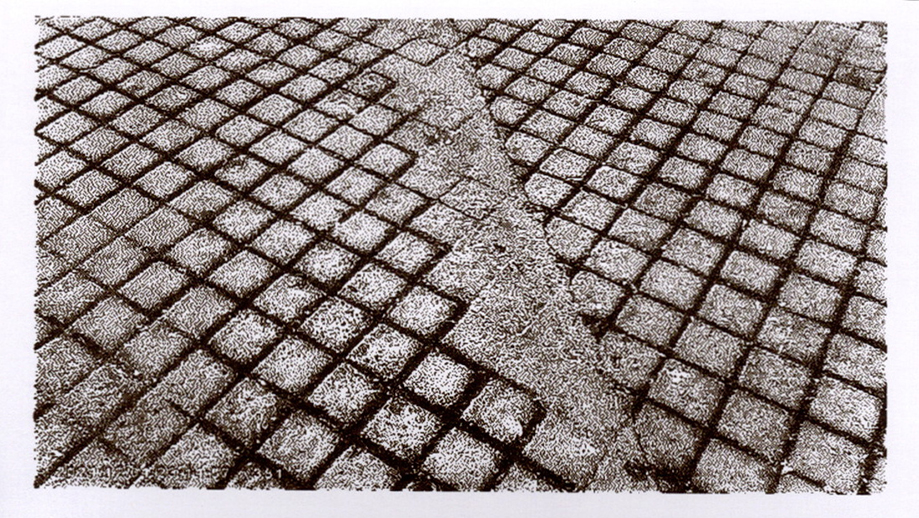
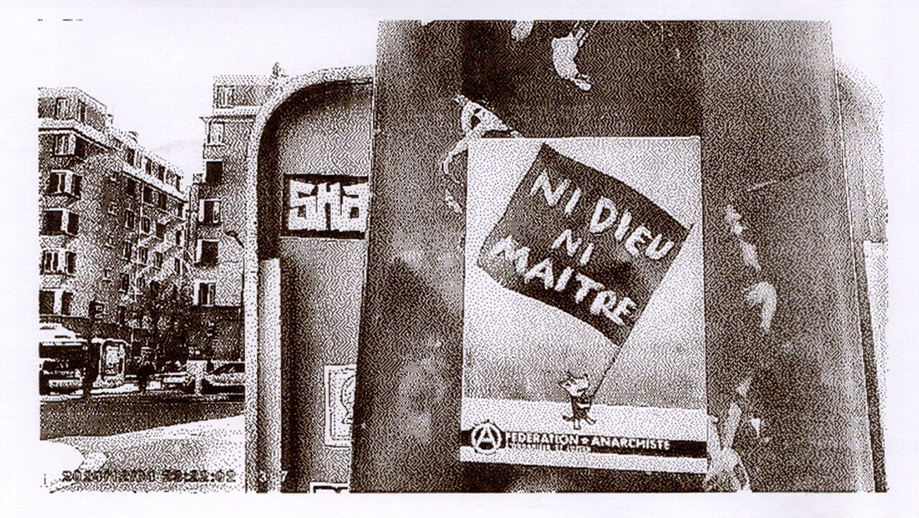
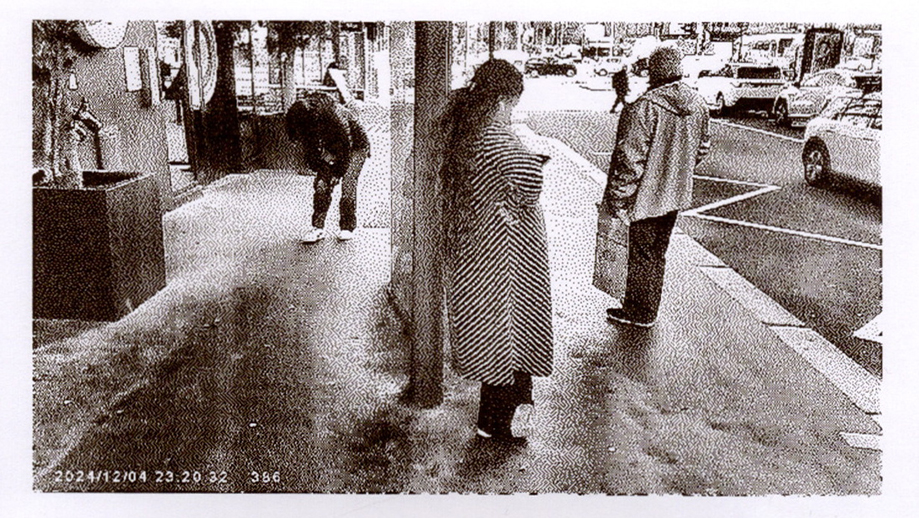
Sous les pavés, la plage. Spray-painted rudely on a Parisian building (albeit in impeccable French penmanship), the line now sums up the beautiful failures of the now-mythic revolt of May 1968, during which (among other things) workers and students pried up city paving stones and launched them at the police. Against the state, the street; against the swarming forces of the superstructure, the bits and pieces of urban infrastructure; against a form of existence and subjectivity said to be ‘reified’, catastrophically ‘petrified’, the people hurled back a metaphor for their own alienated life.
Ours is the age of asphalt. In 1968, the paving stone or cobblestone, so perfect for the transit of horses, was already charmant in a folkloric sense, and being displaced by the smooth, chemically sophisticated substance confected from the smashing, heating, and mixing that produces the unvarying, endless surface that runs like a silk ribbon through the cities of what used to be called the ‘First’ and the ‘Third Worlds’, but in our new asphalt language we called ‘developed’ and ‘developing’. Asphalt is both the absence of stones, and — as a result of machinic crushing — the transfixing, quasi-sublime proliferation of smaller, uncountable stones, impossible to pry up, laughable in the face of a speeding military jeep or fibreglass police shield. The street is still there, but asks to be used differently.
Berlin
Dusty, grey, gay, cold now. The sky here, as Edith Piaf noted, is grimy, crying with boredom. Bureaucracy with actual fax machines. No sun, no wind, no sea, no Anmeldung.
Sunny, warm now. The print room is the only air-conditioned space in the whole building. No wind, no sea, still no Anmeldung.
Cigarette
Among the measures of time crafted by hand, the cigarette is one of the smallest: it spans but a few minutes and even fewer centimetres. Its geometrical extension ignores the grades, indices, and numerals found on clocks, watches, or phone screens. Its geometry is destined only to be burned away. The scale of the cigarette matches that of the body which animates it, fitting the size of the fingers and the lips. This organic proximity contrasts the cigarette’s industrial production and rather echoes the insect figure behind its name (cicada). Like a symbiotic insect, it lives parasitizing our breath. The deathly effects of the cigarette are well known, as contemporary packaging disseminates its horrific and tragic images into our portable and distracted everyday, the inurement of a memento mori. The cigarette’s ubiquity extends far beyond human portraiture, where ochre-coloured ‘fag butts’ are discarded after use and pleasure, and flicker everywhere on the ground of urban environments. In every sense, cigarettes are unsustainable. These miniature fuses measure a passive kind of time, a meantime, delaying or diverting events and duties. Whilst the tiny, tamed flame shortens the cigarette, and wisps of smoke offer images to linger over for a moment, one takes a break from the future.
Conversation
‘I find nothing more interesting than walking and talking,’ says the Argentine filmmaker Lucrecia Martel. The two actions seem so socially indispensable that they hardly require explanation. Yet they might deserve it now. We rarely walk; we mostly move between points from which we depart and at which we arrive. And rather than chatting, we often find that what is spoken are the fears of our time — what remains of those fears: their consensus, settled within what our listening can bear of nuance, controversy, bad taste, difference, not-knowing. What it can tolerate is very little. Instead of chatting, we exchange affirmations.
To think community through conversation may seem like a problem badly posed in terms of scale: a methodological slippage that connects interpersonal exchange too easily to a collective defined beyond the individual. Yet this failure is precisely what justifies the question. Beginning of page[p. 335] Without concern for disproportions, Georges Bataille thought simultaneously about the irradiations between scales: conversations and community.
The question is whether there is a common in conversation that could be the common of community — and, if so, whether we want it. What does it mean to speak around a common? This is not the same as having something in common, nor as speaking about the common.
At the end of the 1920s, after one of the Surrealist evenings on Rue Fontaine, Bataille wrote that if André Breton required silence from his listeners, he did not keep quiet himself. Only Breton’s voice could be heard — a voice Bataille called ‘pretentious and swollen with learning’. Bataille sensed another effect as well: he feared lacking ‘the strength to face them as I was’. The Surrealists — Breton above all — threatened, to the extent that he loved or admired them, ‘to reduce me to a powerlessness that would literally suffocate me’.
At the end of the 1960s, Maurice Blanchot, writing in the wake of the May 1968 protests in France, remarked: ‘Communism is what excludes (and excludes itself from) any already constituted community.’ The myth of community as the fulfilment of a transcendental destiny was too close. That promise — to realize unity as its own work — had already left millions of corpses. For Blanchot, as later also for Jean-Luc Nancy, the problem was not circumstantial but intrinsic to the idea of community conceived as a work, as an essence both pursued and presumed at the origin.
Bataille had suggested something similar earlier. In 1947, in the lecture ‘La religion surréaliste’, he proposed that the ‘absence of community must be the foundation of any possible community’. Not identity but exposure; not essence but the possibility of being outside oneself. A community suspended from every desire for fusion.
What connects Bataille’s distance from Surrealism to this thought of community is a question of tone: emphasis, nuance, silence. The imagination of a common destiny — fusion, essential purpose — depends on the stabilizing authority of a voice raised too high, a voice that claims to converse. Yet there is no purpose in nuance, no teleology in a science of degrees. The question is whether there can be a common — and whether it can risk not-knowing. Beginning of page[p. 336]
Blanchot’s sentence does not place the problem on the side of communism, but on the side of the need to rethink community and the common. Bataille, for his part, names the absence of community as its foundation, not its negation.
Today the fear of our time pushes us to say, when we find ourselves among peers: ‘Here is my community.’ We say it when we believe we share something — interests, values, aesthetics, purposes, desires. But is that a common? Or simply the reassuring average of an identity?
What is common to us is what is least our own. Nothing obeys the logic of liberal exchange more closely than giving what one possesses. A community exposed to its absence — one that disappears whenever it approaches fusion — invites another gesture: to place outside even what we do not have, what we cannot possess, because that is precisely what exposes us to the most radical alterity.
An exposed community might simply be one that dares to change the conversation.
Dream
Nightly excess of emotions, images, actions. The dream can reveal knowledge, which the dreamer does not want to see in waking life. It is seeing with one’s eyes closed. There is a membrane between asleep and awake that these insights need to pass through, presenting omens and slippages. Connected to weaving and spinning — spiders. Bees dream, too — and so do elephants. Dreamy insights can hit one like lightning, revealing situations, connecting moments to come or moments passed. The capacity to dream is the last thing that you can’t take away from someone, even in prison, the only reprieve. But what if you dream that you are in prison while being in prison? Nightmares and Sisyphean tasks occur in dreams, too, tasks that can never be finished.
Fuck you pay me
Fuck you pay me is a call to mobilize against money via money. It is a way of saying there is no fair pay under capitalism, an economic model built on extraction and exploitation. Fuck you pay me is a coping mechanism used to survive its a-logical logic, and non-ethical work ethic. Fuck you pay me elicits a change of scale. It accelerates pre-revolutionary Beginning of page[p. 337] culture. In short: it wants to escalate things. Sex workers — who brought this ingenious slogan to life — know to work as little as possible for as much money as possible. This mantra should be applied to every currently stigmatized or underpaid profession until the capitalist task-compensation model explodes. Steal, inflate, deflate: print more money, do less work. The whore invades the logic of capital by charging as much as possible for as little as possible, becoming, in this way, our extra-scalar guide. A foot rub: one million. Spit in your mouth: two million. True love: three hundred million. Nothing is priceless; fuck you pay me.
Humiliation
It should come as no surprise that humiliation, etymologically speaking, is related to humility, and to homme: Man. From humus to humilis springs the humble/humiliated human. It should come as no surprise, but it does. The proximity of humiliation to humility is humiliating for the modern Man, who has toiled to disidentify with the ground that his big toe, despite his best efforts, at times is forced to grace. To be humiliated is humbling, but to be humble is not supposed to be humiliating. But when humility is separated from humiliation, what is it? It is seen as an elevated moral way of being, but actually it is humilis in bad faith. A sanitized, simplified version of a multiscalar affect. Instead of touching both the low and the high, humility without humiliation is elevated, thus losing touch with the base. Is this an effect of language? As Roland Barthes ponders in his reading of Pascal, ‘the humble, as soon as they speak, turn into the proud.’ Language distorts, only literature can preserve heterology. Perhaps humilitiation could be another spelling for the feeling that recognizes the elevated morality of baseness. The humilitiated subject revels in humus, doesn’t rise above to mark their independence from it, but only to fetch you a glass of water and a freshly rolled cigarette.
Lipgloss, lipstick
When we were kids, some grownup had relayed the worrying statistic to my friend that on average, over the course of a life, a person digests this or that amount of lipstick (approximately 1.8 to 4 kg according to Beginning of page[p. 338] my present-day AI companion). ‘How could that be?’ she remembered thinking. ‘How does lipstick get into the belly?’ she thought, having at that age never yet worn any. It is true that lipstick, and even more so lipgloss, is absolutely contagious, but mostly when in direct contact, as when you drink from my glass, as when I lend you a drag of my cigarette, or when you kiss my lips. Lipgloss is formless, but not airborne.
Years later, at the separatist feminist folk high school somewhere in the north, where by some miracle I managed to get my high school diploma, one of my teachers stood behind me in line for lunch (which we of course alternated cooking, just as we alternated cleaning all the classrooms and bathrooms); she whispered something about my classmate further along in the line, in a sarcastic tone and without actually making the effort of keeping a secret. ‘Ah, did someone hit her?’ ‘I see her eyelids are blue, her cheeks blushed,’ knowing full well that no one had bruised her face, but that she was just wearing makeup, which in some feminist circles is almost as bad. Makeup, for this teacher, simulated patriarchal violence, signified self-flagellation. With lipstick, we draw a line, one that seems to say: Are you with us, or against us?
In a university classroom somewhere in the south, around those same years, another scene involving lipstick repeated itself. One that could be named ‘The day a lipgloss broke right in the middle of class and shared its magical powers with the dust’.
This was a very, very cheap lipgloss, bought from a street vendor just outside the university for ten pesos — much less than one euro. We had only recently become university students, suspended somewhere between adolescence and adulthood, absorbing increasingly sophisticated theories, confronting our parents once again with everything we had just learned. Of course, we never had enough money: not for alcohol, not for proper meals, not for coffee, and certainly not for classy lipgloss. But we still wanted to sparkle at parties.
For some reason, those impossibly cheap lipglosses came in glass containers rather than plastic. I used to call mine my ‘instant lip plumper’. That day, right in the middle of class, for whatever reason — maybe I was bored; maybe I was searching in my bag for a piece of candy — I made one strange movement with my hand and the lipgloss slipped out, landed on the empty chair beside me, then crashed onto the classroom floor. Beginning of page[p. 339]
The glass shattered completely. The thick, sticky liquid that held all its glitter — its promise of instant beauty — spread across the tiles. As it pooled, it gathered tiny particles of dust, hair, and dirt, making them gleam. Throughout the rest of the class, more dust slowly accumulated in the viscous puddle. The sparkle expanded from lips to floor. Sometimes that happens. The magic radiating from a one-euro lipgloss is shared equally between lips and dust.
With my new red lipstick, which, in a felicitous two-for-one situation, comes together with an excessively sticky lipgloss — red and matte on one end, transparent and shiny on the other — I sometimes colour perfectly within the lip line, sometimes slightly outside the line, renegotiating at each touch-up what feminine form to project, protect, or distort as I meet you in another room or line, at another moment in time.
The Night
In note J 617 of his cahiers, Georg Christoph Lichtenberg wrote: ‘Sie bekam eine Guinea des Tags. Des Tags? also für die Nacht nichts?’ So, nothing for the night? God has a secret name, Rome had a secret name, the night is perhaps the world’s secret name. As Elias Canetti wrote: ‘Die Tage werden unterschieden, aber die Nacht hat einen einzigen Namen.’ Even if night means only being in the shadow. What sets humans apart as animals is that they are the only beings who are afraid of the dark. Zeus himself, principle of light as fire, Dios, feared the night (Iliad xiv, 259–60). The order of ancestral things, before any glance.
At night we live like the inside of our bodies, like our blood, alive and perpetually in darkness. The day is a wound and a liberation.
The Pigeon
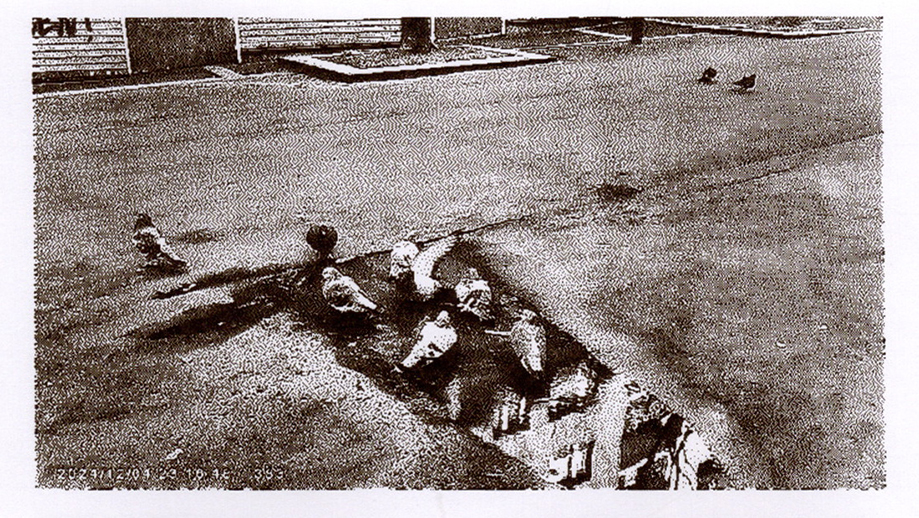
In our cities, most flat and protruding surfaces of buildings are nonchalantly adorned with rows of spikes, sharp points, phalanxes of spears aimed at wounding the sky and all its flâneurs. What is the reason for such hatred? If you ask around, you will often get the same answers, dictated more by a sort of automatic reflex than by mature reflection: they are dirty, they eat rubbish, they carry diseases. These answers can easily be dismissed. All animals that live in contact with humans also feed on their waste. Even crows, seagulls, even nice little sparrows. As for dirtiness, it is not clear why pigeons should be dirtier than any other bird. But pigeons are grey. This colour plays a decisive role in how they are perceived. Try with doves, which are biologically the same animal (Columba livia) but lighter in colour or even white, and you will not get the same reaction. No one imagines Dante writing, ‘come piccioni dal disio chiamati…’ (Inf. v, the poet uses instead ‘doves’, colombe).
Pigeons are extremely intelligent and loving. I have many times personally seen pigeons in Paris crossing the road at pedestrian crossings. Along with dogs and horses, pigeons are one of the few animals to have been decorated in war. Pigeons walk a lot; they could fly but they walk, like us. Maybe they don’t want to hurt our pride. And they walk with that mixture of shyness, caution, and nonchalance that can drive an idle observer crazy. They sway in space like a hieroglyph.
The grey of their plumage is actually a blue-purple shade, the colour of bruises, ecchymosis, and ripe grapes.
It is no longer obvious, but ‘pigeon’ is an onomatopoeia, originally referring to the chirping of chicks (Latin pipionem). But more interesting is the etymology of the Greek word, περιστερά. At least three possible etymologies have been proposed: linked to the Sanskrit prī, ‘love’; linked to the Mediterranean and Middle Eastern cult of Ishtar-Astarte-Aphrodite; or from the compound περι + τερo, meaning ‘the one who stays/lives around’. Pigeons as lovers, as divine handmaidens, as neighbours. Pigeons between us and what is not us, pigeons as metaxu.
A separate human category, those who feed and care for pigeons, is present in every city in the world, attracting ridicule, mockery, disapproval, and pity. Perhaps we cannot forgive such a humble creature Beginning of page[p. 341] for the dream of flight, which insults and belittles us in its naturalness. Pigeons are one of the last glimpses of alterity remaining in our urban settlements. In the cavities above the shutters, they entertain their domestic hearth, allowing us to live on the margins of their society.
We hate them because we fear them; we fear them because they love us.
Sketch
Just a little less formless than the scribble, the sketch provides hints for representation but deserts completion. Its traits are not the encompassing lines of the treatise but rather the fleeting scratches and whipping strokes of the croquis and the draft. Not everyone says, ‘I can draw’, but anyone can surely sketch as it is so abbreviated that it doesn’t require talent. The sketch, from the Greek schedios, is something made in proximity of space and time, ex tempore, just like a squirt (schizzo, Skizze), a blotch (macchia), or a spurt (Entwurf) — incidentally, this runs counter to the long and precise sedimentation of etymological meaning. Sketches defy the project and dance around the issue; they don’t need much space and can proliferate in the margins. When Bataille wrote an introduction to Inner Experience, he preferred a sketch (ébauche) to a plan, urged by an obscure impulse to notes and fragments rather than to a text, seeking interruptions to the line of thought. By sketching, Bataille preserved the ‘spirit of decision’ over ‘the idea of the project’. It is in the sketch that Hegel enjoyed the emergence of the inner Spirit, ‘inventive and imaginative […], from the more transparent, lighter envelope of form’ (Lectures on Aesthetics). An ‘envelope’ that is rough-hewn (esbauché, abbozzato) to be read, a few signs accumulate in a swelling, a lump (bozza) on the blank flatness of the paper sheet. The immediacy of the sketch relies on the empty spaces left between its hinted signs — abbreviating fractures that make it accessible, bridging intention and attention in a matter of a few strokes.
Sleep
Nightly process described as ‘falling’ or ‘sinking’, downward motion (paradox of sleepers hitting the ground and being able to fly in a dream). A suspension of energy. Dying every night or rehearsal for Beginning of page[p. 342] death, leaving and returning, interrupting everyday life, like the ebb and flow of the ocean. Connected to death and love, and the erotic — ‘sleep with me’. Lonely and social state, shared in unity by humans and animals. A state that is naturally connected to inertness, the earth, horizontality, softness, passivity, giving up erectness, subjectivity, action, agency. Beyond the subject’s will: one cannot make oneself sleep immediately; instead one needs to surrender and ride one’s circadian rhythm of the night, or use anaesthesia.
Tears
Minor liquid, as small droplet of salty water, seeping or bursting out. Watery eruptions. Tears also tear something open; they create a rupture and blurry vision. Crying can undo and dissolve the subject temporarily. Registered as intensity and numbness. Tears are often accompanied by shame. One tear evaporates, but many tears build a pool. Alice (in Wonderland) swam in a lake that she had cried. Not much will grow along its shores of salty waters. Who cries? Gendered coding of tears. Internal local weather system, tears like rain, cleansing but also swelling fluid from inside gets outside, translucent, almost like water. Several pathways, and inner canals: eyes, tear glands, nose, throat, lead to snot. Licking tears, swallowing tears, bringing them back inside. Save water.
Transfusion
‘[M]aterialism makes itself headless — like a wound that bleeds and thus transfuses.’ Whereas communication transports something between two points that remain separate, transfusion mixes the physical matter of one body with another. Citation is when elements of one textual body enter and nourish another. Quotation marks and references ensure that heterogeneous elements of discourse retain shape, solidity, distinction; when they are removed, they become fully liquid and transfusion takes place. Citation relies on a violent cut to set transfusion in motion; it releases blood, which signals both life and the body in crisis (and is already made up of multiple elements — medical transfusion does not necessarily involve whole blood). The root meaning of the pouring of liquid between vessels connotes that this is a moment of Beginning of page[p. 343] festival and celebration. It is not limited to texts. To (metaphorically?) chop off the head, whether at the scale of the subject or of the state, to divide and wound imaginary wholeness and closedness, opens up being to overspill, to transfuse into the world and into others.
Vertigo
Vertigo, the sophisticated know, is not fear of heights but the dizzy feeling that can accompany it. In Vertigo, Scottie climbs the belltower stairs. When he looks down, what paralyses him is not the sight of homogeneous distance from the ground in itself, but a folding, stretching, or pulling of perspective. The famous shot moves simultaneously in opposing directions on two scales (distance from the object and focal length of the lens). Masterful scaling up requires at least one constant axis, but Scottie experiences vertigo instead, a sickening shift of proportions in the visual field. The empty centre of the stairs recalls the knot in Madeleine’s hair and his desire that obliterates all appropriate measure and sends him plummeting into obsession. Like the spiral around Marion’s eye in Psycho, it is the hole in representation. Scottie conquers scale by climbing to the top. The price of this victory is, naturally, the woman: Judy falls to her death, for real this time, and Scottie, the detective who has extracted his confession at the top of the tower, can survey the ground from above in full knowledge of its meaning, his vertigo cured.
Notes
- The Edith Piaf song mentioned in the entry ‘Berlin’ is ‘L’homme de Berlin’.
- In the entry ‘Conversation’, Bataille’s quotations are taken from Michael Richardson’s translation, The Absence of Myth: Writings on Surrealism (Verso, 1994), pp. 38, 40–41, 81; and Maurice Blanchot’s quotation is from Political Writings, 1953–1993, trans. by Zakir Paul (Fordham University Press, 2010), p. 93.
- Roland Barthes’s discussion of Pascal in the entry ‘Humiliation’ is from The Neutral: Lecture Course at the Collège de France (1977–1978), trans. by Rosalind E. Krauss and Denis Hollier (Columbia University Press, 2005), p. 44. Beginning of page[p. 344]
- The quotation in the entry ‘Transfusion’ is from Jean-Louis Baudry, ‘Ideological Effects of the Basic Cinematographic Apparatus’, trans. by Alan Williams, in Movies and Methods, ed. by Bill Nichols, 2 vols (University of California Press, 1976–85), ii (1985), pp. 531–42 (p. 539).
Notes
- Filippo Bosco, Kirill Chepurin, Franco Costantini, Tobi Haslett, Nicolas Helm-Grovas, Marietta Kesting, Jasmine Clotilde Pisapia, Angelica Stathopoulos, Verónica Stedile Luna. ↵
Bibliography
- , The Neutral: Lecture Course at the Collège de France (1977–1978), trans. by Rosalind E. Krauss and Denis Hollier (Columbia University Press, 2005)
- , The Absence of Myth: Writings on Surrealism, trans. by Michael Richardson (Verso, 1994)
- , ‘Ideological Effects of the Basic Cinematographic Apparatus’, trans. by Alan Williams, in Movies and Methods, ed. by Bill Nichols, 2 vols (University of California Press, 1976–85), ii (1985), pp. 531–42
- , Political Writings, 1953–1993, trans. by Zakir Paul (Fordham University Press, 2010)
© by the author(s)
Except for images or otherwise noted, this publication is licensed under a Creative Commons Attribution-ShareAlike 4.0 International License.© 2026 ICI Berlin Press